Modern enterprise networks handle massive data volumes across hybrid cloud infrastructures, on-premises data centers, and remote employee endpoints. Managing this infrastructure requires security teams to actively inspect, classify, and filter network traffic to enforce corporate policies, maintain data security, and prevent cyber threats. While basic firewalling relies on simple IP addresses and port numbers, comprehensive traffic control requires a combination of high-speed hardware packet brokers, proxy systems, application-level inspection engines, and forensic recording appliances.
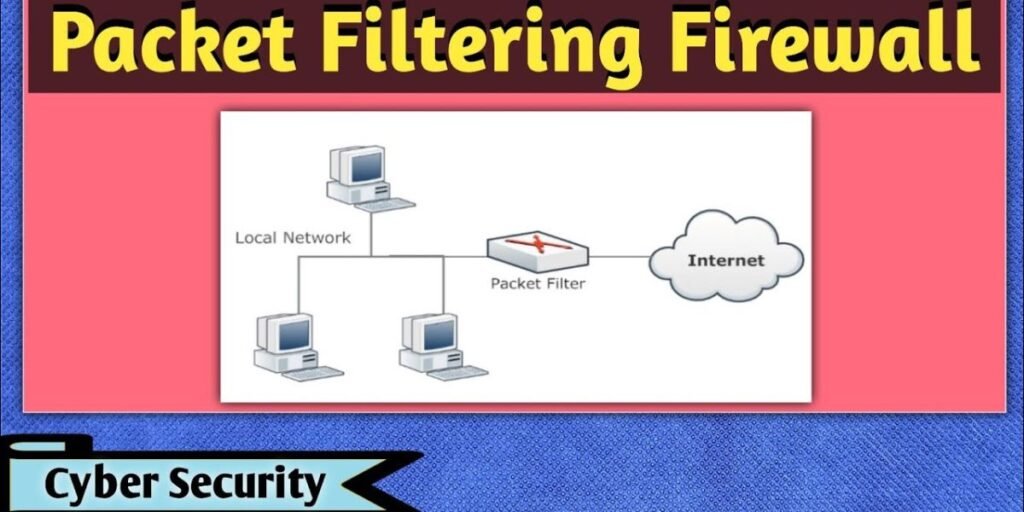
Filtering raw transport layers differs fundamentally from regulating application behavior. Packet-level processing operates directly at Layer 2 through Layer 4 of the OSI model, making fast, binary decisions to drop, mirror, or route traffic based on packet headers. Application-level inspection operates higher up at Layer 7, analyzing actual payloads, decoding HTTP verbs, enforcing URL category blocklists, and scanning transaction contents for malware or sensitive data leaks.
Network Packet Brokers for Traffic Filtering
Network Packet Brokers, commonly known as NPBs, serve as the backbone of high-throughput traffic visibility architectures. Sitting between physical network infrastructure and secondary security tools, an NPB collects network traffic from multiple network TAPs or switch SPAN ports, cleans up unneeded data, and distributes optimized packet streams to downstream analytics tools.
Modern enterprises deploy NPBs from vendors like Keysight Ixia, Gigamon, and NetScout to prevent monitoring tools from becoming overwhelmed by redundant data streams. Instead of bombarding an Intrusion Detection System or Network Detection and Response platform with total raw network throughput, the packet broker filters out low-risk traffic like encrypted media streaming or internal backup routines before packet delivery.
Traffic aggregation pools packets from dozens or hundreds of distinct network spans into a central fabric. Within this fabric, NPBs execute inline hardware filtering using ASIC or FPGA silicon, running precise rules across Layer 2 headers, Layer 3 IP ranges, and Layer 4 TCP or UDP port signatures. Advanced brokers extend this filtering into Layer 7, matching protocol traits to separate standard HTTP or HTTPS flows from non-standard web traffic.
Beyond basic filtering, packet brokers perform traffic replication and dynamic load balancing. Replication allows the same packet stream to be copied and delivered simultaneously to multiple tools, such as feeding a SIEM and an inline breach detection unit at the same time without adding network latency. Dynamic load balancing spreads high-volume traffic flows across clusters of monitoring appliances, preventing packet dropping during traffic spikes.
Pricing for enterprise Network Packet Brokers depends on physical hardware chassis configurations, port density, and software feature licenses. Entry-level modular NPB appliances typically start around $10,000 to $15,000, while chassis-scale deployments for large data centers easily exceed $100,000. Vendors rarely offer free plans for physical NPB hardware, though virtual packet broker appliances often include limited trial licenses for testing in cloud environments.
HTTP and HTTPS Filtering With Secure Web Gateways
Secure Web Gateways, or SWGs, act as inline application proxy checkpoints positioned between network users and the external internet. Unlike packet brokers that passively copy or route traffic, SWGs inspect outbound web transactions in real time to enforce company usage policies, block malicious websites, and halt data exfiltration over HTTP and HTTPS protocols.
Platforms like Zscaler Internet Access and Cisco Umbrella represent the modern evolution of proxy-based web filtering, shifting from local hardware appliances to cloud-delivered Secure Service Edge architectures. These platforms evaluate traffic against rich context criteria, examining user identity, real-time risk ratings, explicit URL paths, domain reputation scores, and specific cloud application behaviors.
When an endpoint initiates an HTTP request, the gateway intercepts the connection, inspects the requested URL string, and checks the user’s role against access policies. If an employee attempts to access a restricted file-sharing portal or a known phishing site, the gateway terminates the connection immediately and renders a custom block page in the user’s browser.
Modern SWGs inspect data movement inside legitimate web tools like SaaS applications. Gateways can allow read access to personal webmail while actively blocking file upload attempts containing corporate credentials, proprietary code, or financial records.
Pricing models for Secure Web Gateways rely on per-user annual subscriptions. Zscaler Internet Access list pricing starts around $100 per user annually for basic business tiers, scaling up to $350 per user annually for advanced packages incorporating Cloud Access Security Broker features, deep sandboxing, and data loss prevention. Cisco Umbrella operates on similar user tier pricing, generally spanning $30 to $135 per user annually depending on whether an enterprise selects basic DNS protection or full Secure Web Gateway features. Both vendors offer structured 14-day or 30-day enterprise trial programs, though neither provides a permanent free plan for corporate deployments.
Deep Packet Inspection for Enterprise Traffic
Deep Packet Inspection, or DPI, elevates traffic filtering by looking beyond external header information into the actual payload section of data packets. Standard firewalls route or block packets using basic parameters like target IP addresses or destination ports 80 and 443. DPI engines open the payload portion of the packet to analyze the true underlying application signatures and protocol behaviors.
This payload-level examination allows DPI engines to identify applications regardless of port obfuscation. An employee might run a peer-to-peer file-sharing client or an unauthorized VPN tunnel over port 443 to bypass standard port blocks. A DPI engine identifies the specific protocol handshakes and bit patterns within the payload, accurately tagging the application traffic as unauthorized and dropping the connection.
In enterprise threat mitigation, DPI provides inline protocol validation. The engine checks whether web traffic passing through the network strictly complies with official HTTP specification standards, blocking malformed HTTP requests often used in buffer overflow exploits or evasion tactics.
DPI forms the underlying software capability embedded across many enterprise security platforms rather than standing alone as a single product. Standalone software development kits and hardware-accelerated DPI engines, such as Palo Alto Networks App ID or Qosmos ixEngine, are licensed directly to networking hardware vendors or sold to enterprises as enterprise firewall add-ons, with pricing built into annual security gateway software subscriptions.
TLS Inspection for HTTPS Traffic
Over 90 percent of web traffic flows across encrypted TLS and SSL channels. While encryption preserves privacy and secures data in transit, it creates a massive blind spot for security tools. Malware downloads, command and control communications, and unauthorized data transfers hide inside encrypted HTTPS tunnels, bypassing standard packet filtering completely unless decrypted.
TLS inspection solves this problem through a deliberate, secure man-in-the-middle proxy model. When an endpoint initiates an HTTPS connection to an external site, the enterprise inspection proxy intercepts the request. The proxy establishes its own secure TLS session with the destination web server, receives the external content, decrypts it locally, and presents the plain text data to DPI engines, antivirus scanners, and SWG tools for inspection.
Once the security checks pass, the proxy re-encrypts the data using a locally trusted enterprise root certificate authority certificate and delivers it securely to the user’s endpoint browser.
Certificate management forms the critical foundation of functional TLS inspection. Security administrators must push the enterprise private root certificate to all managed corporate devices using centralized management tools like Microsoft Intune or Active Directory Group Policy. Unmanaged personal devices connected to the network will trigger severe browser security warnings because they do not trust the proxy’s locally generated certificates.
TLS inspection faces operational limitations and privacy constraints. Decrypting massive volumes of high-speed encrypted traffic demands immense processing power, requiring hardware acceleration or dedicated decryption appliances like F5 BIG-IP SSL Orchestrator. Enterprise policies must also exclude sensitive web categories from decryption entirely, keeping employee banking portals, personal healthcare sites, and strict legal communications encrypted end to end to preserve privacy compliance.
Hardware TLS decryption appliances range from $15,000 for mid-market edge models up to $150,000 or more for high-throughput data center appliances. Software-based TLS inspection is typically bundled into unified threat management or secure web gateway licensing tiers, carrying no separate fee beyond base user subscription costs.
Full Packet Capture for Network Traffic Analysis
Full Packet Capture, often abbreviated as FPC, operates differently from real-time traffic filtering tools. Active filtering systems evaluate live traffic flows to block or allow packets instantly. FPC systems passively record and index complete raw network packets directly to high-speed storage arrays, creating an immutable physical audit trail of every byte that traverses the network interface.
When security incidents occur, real-time filters can only show that an anomaly happened. Full packet capture systems allow incident responders and threat hunters to go back in time and reconstruct the exact sequence of events. Analysts can extract dropped files, inspect complete HTTP header exchanges, view exfiltrated data, and analyze raw network payloads long after the initial security alert triggered.
Platforms like EndaceProbe and SentryWire specialize in high-speed, continuous packet capture across multi-gigabit network backbones. These appliances leverage specialized storage configurations and continuous indexing architectures to capture sustained 100Gbps network flows without dropping a single packet.
FPC serves as an essential resource during retrospective threat hunting. If a vendor releases a new indicator of compromise for a zero-day vulnerability, security teams can run forensic queries against months of recorded PCAP files to discover whether external actors exploited that vulnerability prior to signature availability.
Full packet capture solutions carry custom, quote-based pricing based on physical storage capacity, capture interface speed, and deployment scale. Dedicated continuous packet recording hardware appliances like EndaceProbe typically start at $20,000 for edge deployments, running well past $100,000 for enterprise core data center units with multi-terabyte storage capacity. Software-based capture suites or developer-targeted debugging systems offer limited free tiers or entry plans starting around $26 per month, though these are designed for application monitoring rather than high-throughput enterprise network recording.
Network TAPs and Traffic Visibility
Security and filtering systems cannot process data they cannot see. Enterprises acquire exact copies of physical and virtual network traffic using hardware Network TAPs or switch SPAN ports, providing the raw visibility required by packet brokers, DPI appliances, and capture devices.
Test Access Points, or TAPs, are dedicated hardware devices inserted directly into physical network cabling links. Optical fiber or copper TAPs passively split the light or electrical signal flowing across the wire, generating a complete, uncorrupted clone of all full-duplex traffic without introducing latency or creating a single point of network failure.
SPAN ports, also called port mirrors, use software built into network switches to copy traffic from specified ports or VLANs and send it to a designated monitoring interface. While SPAN ports cost nothing extra to deploy, high switch CPU utilization during heavy traffic loads can cause the switch to silently drop mirrored packets, rendering SPAN less reliable than dedicated hardware TAPs for forensic capture.
In virtualized and cloud environments, enterprises deploy virtual TAPs, known as vTAPs, or native cloud traffic mirroring services like AWS VPC Traffic Mirroring and Azure Virtual Network TAP. These software agents capture packet flows between virtual machines and cloud container instances, encapsulating the data and sending it securely to centralized security processing pools.
Passive network TAPs are relatively inexpensive, basic hardware units. Fiber optic TAPs start between $200 and $800 per link, while high density modular TAP chassis systems with redundant power modules cost between $5,000 and $15,000. Vendors do not offer free hardware TAPs, though switch SPAN port mirroring requires no additional software or hardware purchase beyond existing enterprise switch hardware.
How Enterprise HTTP Traffic Filtering Works
Enterprise web filtering relies on two distinct operational architectures working side by side: the passive visibility pipeline and the active proxy pipeline. Understanding how these two paths complement each other helps security teams build complete protection frameworks.
The passive visibility pipeline moves traffic from physical wires directly into analysis tools without impacting live connection speed.
- Raw packets travel across core enterprise network links.
- Hardware TAPs or switch SPAN ports create an exact copy of the underlying light or electrical signals.
- The TAP passes cloned data directly to a Network Packet Broker.
- The packet broker strips unnecessary outer headers, removes duplicate packets, and filters out high-volume, low-risk traffic flows.
- The broker routes targeted packet streams to out-of-band security systems, including Intrusion Detection Systems, Deep Packet Inspection engines, and Full Packet Capture storage appliances.
The active proxy pipeline handles outbound user web requests inline, making enforcement decisions before packets leave the corporate boundary.
- An endpoint browser initiates an HTTP or HTTPS connection bound for an external web destination.
- Local client software or network routing policies redirect the request into an inline Secure Web Gateway.
- The gateway terminates the incoming connection and executes TLS decryption using local root certificates.
- DPI engines analyze the decrypted payload, validating protocol compliance, user identities, URL categories, and file attachments.
- If the content satisfies corporate security rules, the gateway creates a new outbound connection to the destination web server and passes the safe traffic through.
Choosing the Right Traffic Filtering Solution
Selecting appropriate filtering infrastructure requires balancing performance metrics, security requirements, and network architecture constraints.
High throughput data center links carrying tens or hundreds of gigabits per second require dedicated hardware acceleration. Operating software-based proxy filtering across these links introduces unacceptable latency and connection bottlenecks. Data center core environments favor hardware Network Packet Brokers coupled with high-speed out-of-band DPI engines.
Edge environments and branch offices focused on user protection benefit from cloud native Secure Web Gateways. Cloud proxy architectures scale bandwidth dynamically on demand, removing the need to anchor local proxy appliances inside every branch location.
Inline deployments demand absolute reliability. If an inline gateway or proxy fails, corporate internet access halts entirely unless redundant open bypass switches exist. Out-of-band passive monitoring avoids this risk completely, allowing security analysis to run in parallel without posing a threat to operational network uptime.
Organizations working under strict regulatory compliance frameworks, such as PCI DSS or HIPAA, must maintain total visibility over encrypted communications while protecting personal data. These environment requirements mandate granular TLS inspection configurations capable of bypassing health and financial web categories while enforcing rigorous logging across all other traffic paths.
Enterprise Traffic Filtering Solutions by Use Case
Different operational requirements mandate targeted traffic handling technologies.
- Web access control: Cloud Secure Web Gateways and web filtering platforms enforce corporate internet policies, block malicious domains, restrict SaaS application misuse, and prevent data exfiltration across user endpoints.
- Traffic distribution: Hardware Network Packet Brokers aggregate multi-gigabit link feeds, filter out duplicate frames, strip headers, and load balance targeted packet streams across secondary monitoring appliances.
- Application-aware inspection: Deep Packet Inspection engines evaluate protocol compliance, accurately tag applications running on non-standard ports, and detect hidden threats inside complex packet payloads.
- Encrypted web traffic: Dedicated TLS inspection proxies handle inline session termination, decrypt HTTPS flows, present clear text to threat engines, and safely re-encrypt traffic bound for user browsers.
- Investigation and forensics: Continuous Full Packet Capture appliances record complete raw PCAP streams to physical storage arrays, giving security teams historical audit records for threat hunting and post-breach investigations.
- Passive visibility: Physical Network TAPs and switch SPAN ports split optical or electrical signals across core links, feeding traffic to visibility fabrics without introducing network latency.
Common Challenges With HTTP Traffic Filtering
Managing enterprise traffic filtering introduces complex operational and technical hurdles that require constant adjustments by network engineering teams.
Massive encryption adoption continues to complicate visibility efforts. Decrypting modern TLS sessions consumes considerable CPU resources, often driving up latency across inline security gateways. Furthermore, upcoming protocol updates like Encrypted Client Hello obscure domain names during initial TLS handshakes, forcing security tools to rely more heavily on client endpoint agents rather than passive network inspection.
High-speed traffic volumes strain monitoring fabrics. When network backbones upgrade to 100Gbps and 400Gbps speeds, secondary security tools struggle to ingest data without dropping frames. Failure to deploy efficient packet brokers to filter out redundant video or backup traffic can cause critical security alerts to be missed due to buffer overflows.
Cloud and hybrid network architectures introduce blind spots. As workloads move out of traditional data centers into distributed public cloud environments, physical TAPs no longer provide full traffic visibility. Security teams must deploy virtual tapping tools and API level integrations to maintain consistent policy enforcement across multi-cloud environments.
User privacy considerations conflict directly with deep content inspection. Inspecting encrypted employee web traffic exposes security administrators to sensitive credentials, personal health records, and private financial communications. Maintaining explicit, category-based decryption exclusions is essential to remain compliant with global privacy laws like GDPR.