
Organizations must maintain absolute control over digital boundaries to ensure that every byte crossing the wire is explicitly permitted, thoroughly inspected, or securely dropped. Managing data flows requires moving beyond basic perimeter defense into granular visibility where security teams dictate exactly how information moves across corporate segments.
A foundational technical distinction separates passive observation from active enforcement. A packet sniffer operates strictly as an observation tool that captures and decodes frames moving across a medium without altering or stopping them. Firewalls and filtering appliances act as enforcement engines that inspect payloads in real time and drop unauthorized packets before they reach sensitive internal assets.
Understanding this operational boundary prevents architectural failures where engineers deploy passive monitoring sensors expecting them to block malicious payloads. Real-world network engineering requires matching the right inspection mechanism to the specific throughput, latency, and security demands of the enterprise.
The Main Types of Network Data Filtering Solutions
Securing modern data architectures demands an array of specialized technologies rather than a single unified box at the edge. Different layers of the infrastructure require distinct mechanisms to handle packet analysis, state tracking, and protocol enforcement.
- Network firewall software running on dedicated bare-metal servers or hypervisors
- Next-generation firewall platforms integrating layer 7 application control
- Hardware firewall appliances built with dedicated packet-processing ASICs
- Deep packet inspection systems analyzing payload contents beyond standard headers
- Network TAPs and packet brokers aggregating and filtering traffic copies for security tools
- Packet capture and analysis software for forensic investigations and debugging
- Data diodes and unidirectional gateways enforcing hardware-level one-way data flows
- Secure cross-domain transfer systems validating and sanitizing files moving between security zones
These technologies solve fundamentally different filtering problems across distinct architectural tiers. The market frequently conflates passive capture utilities with active security gates, making it essential to evaluate each solution based on its exact operational capability.
Best Software Solutions for Filtering Network Data Transfers
Deploying software-based filtering gives organizations the flexibility to run advanced security policies on commodity hardware or virtualized enterprise fabrics. These platforms deliver robust stateful inspection and application awareness without requiring dedicated physical chassis at every deployment point.
1. Fortinet FortiGate
Fortinet FortiGate virtual appliances extend enterprise-grade security inspection into software-defined data centers and cloud VPCs. The platform excels at stateful firewalling combined with real-time application control to identify traffic regardless of standard port assignments.
Administrators rely on integrated intrusion prevention systems and SSL inspection engines to catch hidden threats inside encrypted tunnels. Advanced web filtering rules govern user access while policy-based traffic control shapes bandwidth for critical business applications.
2. Palo Alto Networks VM-Series
Palo Alto Networks VM-Series brings virtualized next-generation firewall capabilities to software-defined environments and hypervisor clusters. The software enforces application-aware policies that look past TCP and UDP ports to identify the exact protocol in use.
Integrated threat prevention modules block known exploits while URL filtering manages external web access. Native WildFire integration automatically analyzes suspicious files in a cloud sandbox, and comprehensive SSL/TLS inspection ensures encrypted traffic remains fully visible to security analytics engines.
3. Sophos Firewall
Sophos Firewall operates as a versatile software security platform designed for mid-market and distributed enterprise networks. It leverages advanced application filtering and granular web filtering to govern user activity across local segments.
The software incorporates robust intrusion prevention systems alongside deep TLS inspection to neutralize threats hidden in secure sessions. Administrators utilize flexible policy control alongside comprehensive VPN and network segmentation tools to isolate critical internal zones.
4. pfSense Plus
pfSense Plus delivers an agile firewall and routing platform capable of running on standard x86 hardware appliances or virtual environments. It provides a powerful stateful firewall engine governed by rules built on interfaces, IPs, ports, and protocols.
Network engineers use built-in support for VLANs and secure VPN tunnels to architect complex multi-zone topologies. The rich package ecosystem allows operators to install additional security packages, giving organizations a highly customizable alternative to rigid commercial platforms.
5. OPNsense
OPNsense provides an open-source security platform featuring a hardened codebase and an intuitive web management interface. The system delivers reliable stateful filtering backed by robust IDS/IPS integration for active threat mitigation.
Operators configure advanced web proxy and filtering options to regulate HTTP and HTTPS traffic flows. Comprehensive VLAN and network segmentation capabilities make it an ideal choice for enterprise labs, branch offices, and specialized software-defined deployments.
6. Linux Firewall Stack: nftables
Leveraging the native Linux kernel filtering stack provides maximum performance and complete programmatic control over network traffic. The framework handles kernel-level packet filtering directly within the operating system network stack.
Engineers write precise rules based on addresses, ports, and protocols while maintaining stateful filtering through connection tracking mechanisms. Integrated Network Address Translation capabilities allow Linux servers and gateways to manage complex routing topologies without third-party security software overhead.
Hardware Solutions That Actually Filter Network Data
Deploying physical security appliances provides dedicated processing power capable of inspecting multi-gigabit traffic streams without introducing unacceptable latency. Dedicated hardware isolates security processing from general operating system overhead, ensuring consistent performance during peak traffic loads.
1. Fortinet FortiGate Appliances
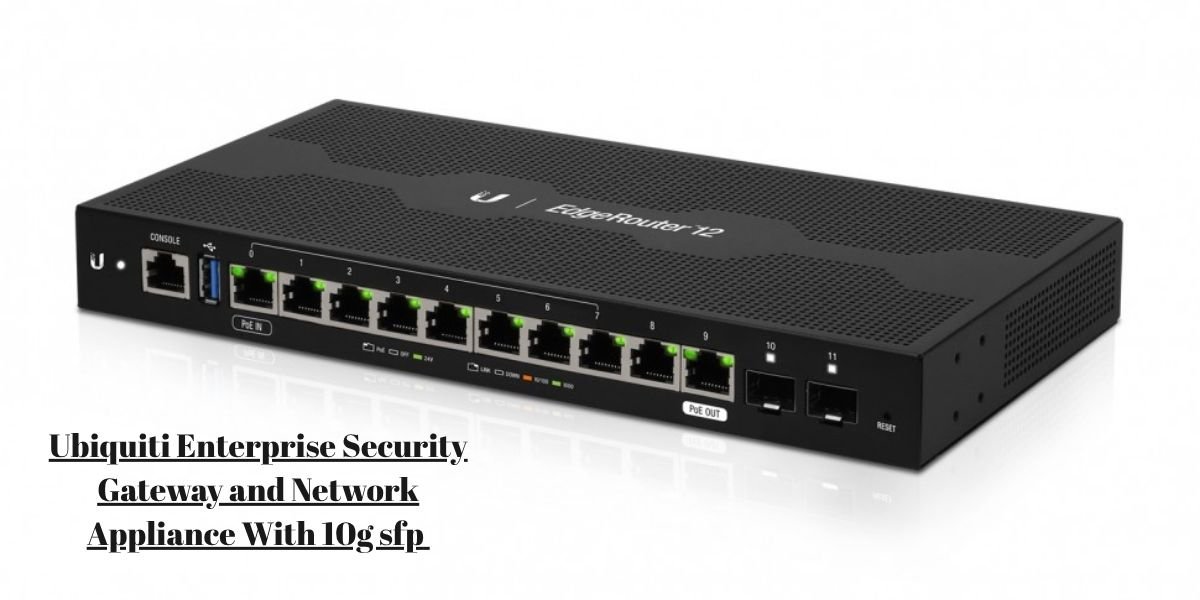
Fortinet hardware appliances leverage custom security processors to offload heavy inspection tasks from the main CPU. These dedicated physical units handle high-throughput enterprise routing while maintaining line-rate stateful inspection across all ports.
Advanced NGFW functions integrate seamlessly with built-in intrusion prevention systems to drop malicious packets instantly. Hardware-accelerated SSL inspection prevents encrypted sessions from becoming blind spots for security teams.
2. Palo Alto Networks PA-Series
Palo Alto Networks PA-Series physical appliances deliver high-performance security enforcement across enterprise campuses and data centers. The platform relies on dedicated processing architecture to execute rigorous application identification protocols.
Rigorous security policy enforcement stops unauthorized data transfers before they traverse internal segments. Comprehensive threat prevention engines, robust URL and content controls, and high-throughput TLS inspection safeguard critical infrastructure against sophisticated breach attempts.
3. Cisco Secure Firewall
Cisco Secure Firewall appliances integrate high-performance physical switching with advanced threat defense capabilities. The hardware architecture supports enterprise-grade stateful firewalling alongside deep NGFW capabilities.
Integrated intrusion prevention systems actively block exploitation attempts while granular application visibility and control monitors active sessions. Physical appliance deployment allows seamless integration into larger Cisco security fabrics and enterprise routing architectures.
4. Juniper SRX Series
Juniper SRX Series gateways combine carrier-grade routing with robust firewall protection in a single hardware platform. The systems enforce strict stateful firewalling rules alongside granular security policies across distributed branch locations.
Advanced application visibility tools map active data transfers in real time. Tight routing and security integration makes these appliances ideal for demanding data center and service provider environments where uptime and performance are non-negotiable.
5. Sophos Firewall Appliances
Sophos hardware appliances offer accessible, high-performance security filtering for organizations requiring dedicated physical form factors. These units bring advanced application and web inspection directly to the network edge.
Integrated hardware acceleration ensures that rigorous security checks do not degrade overall throughput. Small and mid-market organizations utilize these appliances to secure branch locations without managing complex enterprise chassis architectures.
Network TAPs and Packet Brokers With Filtering
Network visibility architectures require specialized hardware to access traffic without altering inline performance or introducing single points of failure. Passive monitoring tools cannot inspect traffic effectively if they are overwhelmed by duplicate packets, unneeded video streams, or massive background data transfers.
- Gigamon
- Keysight
- APCON
- NETSCOUT
- Garland Technology
- Network Critical
These devices operate distinctly from boundary firewalls by managing copies of network traffic rather than blocking inline flows. Network TAPs and packet brokers capture raw data feeds, strip out redundant frames, aggregate multiple links, and filter specific packets before delivering them to downstream security analytics platforms.
Packet Sniffers and Capture Software
Network forensic investigations require specialized tools capable of recording and decoding raw frames moving across a wire. Packet analysis utilities provide deep visibility into protocol handshakes, timing issues, and payload contents.
1. Wireshark
Wireshark serves as the industry standard for graphical packet capture and protocol decoding. Analysts use advanced display filters to isolate specific data streams out of millions of captured frames.
Detailed conversation analysis helps engineers diagnose complex application errors and security anomalies. These filters only affect what the analyst sees on screen rather than acting as an active network enforcement policy.
2. tcpdump
The tcpdump utility provides lightweight, command-line packet capture capabilities across Linux and Unix server interfaces. Operators write precise Berkeley Packet Filter expressions to capture exact traffic subsets directly at the network card level.
Engineers rely on this tool for rapid server troubleshooting and low-overhead investigation in headless environments. This establishes a clear operational boundary between passive forensic analysis tools and active enforcement firewalls.
Deep Packet Inspection Solutions
Traditional network devices evaluate packets based solely on layer 3 and layer 4 headers, treating all traffic on standard ports identically. Deep packet inspection systems bridge the gap between simple packet filtering and true application awareness by analyzing the actual payload data traveling inside the stream.
- Header-based filtering inspecting source and destination IPs, ports, and basic transport protocols
- Protocol identification recognizing underlying communication standards regardless of assigned port numbers
- Application identification detecting specific software tools and services operating over standard web ports
- Content inspection scanning payload bytes for malicious signatures, data loss patterns, and restricted strings
- Encrypted traffic limitations requiring active SSL/TLS decryption engines to inspect secure payloads
Consider a standard enterprise scenario where a traditional rule permits all traffic on TCP port 443. A deep packet inspection system goes further by identifying whether that encrypted stream carries authorized business communications or unauthorized file sharing applications, enforcing granular control over what actually traverses the wire.
Data Diodes and Hardware-Enforced One-Way Filtering
Critical infrastructure and industrial control environments require absolute separation between high-security internal networks and untrusted external zones. Ordinary firewalls rely on configurable software rules that can be misconfigured or exploited, prompting the adoption of hardware-enforced unidirectional solutions.
- Owl Cyber Defense
- Waterfall Security Solutions
- Advenica
- OPSWAT
- Network Critical
These specialized systems utilize physical optics and hardware components to ensure data travels in one direction only, making inbound cyberattacks physically impossible. While a firewall determines what traffic is permitted based on policy rules, a data diode enforces strict physical boundaries that allow operational telemetry to exit a protected network without opening a return path for external threat actors.
Secure Data Transfer and Cross-Domain Solutions
Moving information between disparate security domains requires advanced mechanisms that go far beyond standard firewall packet dropping. Secure transfer platforms inspect, sanitize, and validate files before allowing them to cross high-security boundaries.
- Protocol restrictions stripping non-compliant commands and enforcing strict structural standards
- Content inspection evaluating file integrity and structure against baseline policies
- Malware scanning executing multi-engine virus checks on incoming data payloads
- Transfer validation verifying user authorization and data classification levels
- Policy enforcement and auditing generating immutable logs for regulatory compliance
These systems ensure that operational data moves safely between isolated networks without exposing sensitive internal architectures to external compromise.
Which Solution Fits the Filtering Job?
Selecting the correct technology requires matching your operational security goals to the appropriate hardware or software platform. The structured table below outlines which tool addresses specific network filtering and data transfer challenges.
| If Your Goal Is To… | Use This Solution Category |
| Block traffic by IP, port, or protocol | Packet-filtering / stateful firewall |
| Control applications regardless of port | Next-generation firewall (NGFW) |
| Inspect traffic payloads for application signatures | Deep packet inspection (DPI) / NGFW |
| Filter traffic at a physical network boundary | Hardware firewall appliance |
| Filter traffic inside a virtualized or cloud environment | Virtual / software firewall |
| Inspect captured packets and diagnose errors | Wireshark / tcpdump |
| Reduce traffic volume sent to monitoring tools | Filtering network TAP / packet broker |
| Prevent all return paths into a protected network | Data diode / unidirectional gateway |
| Move files securely between security domains | Secure cross-domain transfer system |
Evaluating your exact infrastructure requirements ensures you deploy an architecture that successfully enforces security policies without introducing unnecessary bottlenecks.