When navigating the modern landscape of artificial intelligence platforms, users frequently encounter varying terminology for the exact same underlying technology. DeepAsk represents a common search variation used by individuals seeking information on DeepSeek, which serves as the official platform and model family name developed by DeepSeek. Understanding this distinction matters because searching for unofficial terms can lead to confusion or misleading third-party summaries that fail to capture what the ecosystem actually achieves.
This examination cuts through the marketing noise to analyze DeepSeek’s authentic technical capabilities in 2026. Rather than recycling generic lists of conversational AI traits, this guide focuses on the engineering realities driving modern workflows. Readers will find deep dives into foundational advancements including DeepSeek-V4, dual thinking modes, advanced coding architectures, a massive 1-million-token context window, robust tool utilization, agentic task execution pipelines, flexible API integrations, structured data generation, and the nuanced realities of open-weight model deployment.
Skipping generic historical overviews of artificial intelligence evolution, the following sections unpack how these architectural pillars function in practice for everyday users, software engineers, and enterprise developers.
What Is DeepSeek and Why Do Some People Search for DeepAsk?
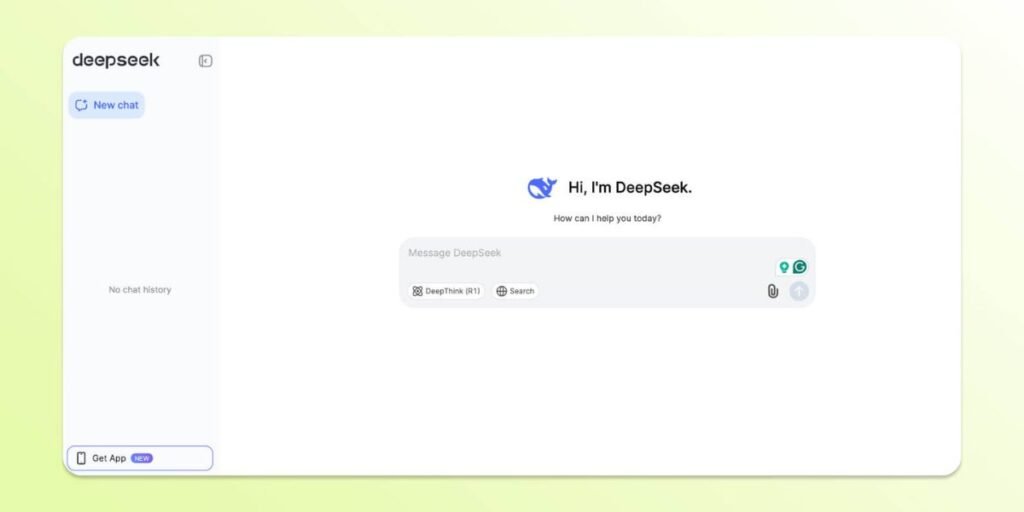
To evaluate platform features accurately, one must first understand the structural composition of the provider. DeepSeek operates as an advanced artificial intelligence research organization and model developer responsible for training some of the most cost-efficient and structurally optimized foundation models in the industry. The consumer-facing conversational assistant is known formally as DeepSeek Chat, accessible globally through dedicated web browsers and mobile application ecosystems across iOS and Android.
Beyond the standard chat interface lies the DeepSeek API, which grants developers programmatic access to the underlying model architecture. The broader product lineup includes the flagship DeepSeek-V4 generation, alongside specialized variants such as V4-Pro and V4-Flash. A common technical pitfall involves confusing the chat interface with the underlying model. The chatbot is simply a graphical user interface layered on top of a foundational model, whereas the API permits direct integration into custom software applications.
This architectural reality naturally explains the origin of alternative search behavior. DeepAsk is not an official product, brand name, or subsidiary created by DeepSeek. When users type DeepAsk chatbot features or variations like Deep Ask into search engines, they are looking for official capabilities associated with DeepSeek. This guide honors that search intent by addressing user queries directly while grounding every technical metric, benchmark reality, and architectural feature in verified DeepSeek documentation and deployment realities.
DeepSeek’s Most Important AI Features in 2026
DeepSeek-V4 brings thinking and non-thinking modes
Modern artificial intelligence demands a balance between lightning-fast conversational speed and deep, deliberate computational problem-solving. The DeepSeek-V4 architecture addresses this dichotomy by implementing distinct operating modes that users can leverage depending on the complexity of their immediate task.
Non-thinking responses prioritize rapid token generation, making them ideal for casual dialogue, quick translations, basic text formatting, and straightforward information retrieval where latency directly impacts user experience.
When facing complex challenges, users can activate the thinking mode, which allocates higher reasoning effort toward internal verification steps before rendering an output. This mode shines in advanced mathematics, intricate technical troubleshooting, and multi-step logic problems.
The core tradeoff involves response speed versus reasoning depth. Activating deeper cognitive pathways increases processing time because the model performs internal chain-of-thought calculations. Users must remember that enabling a reasoning mode serves as an advanced capability for logic validation rather than a mathematical guarantee of absolute factual correctness.
A 1M-token context window supports unusually large workloads
The integration of a 1-million-token context window fundamentally alters how users interact with large bodies of unstructured data. Processing one million tokens allows the model to ingest massive volumes of information simultaneously, transforming the assistant from a simple query-and-response tool into a comprehensive document analysis engine.
Practical applications include reading entire reference textbooks, analyzing massive enterprise codebases, parsing extensive historical research papers, retaining continuity across lengthy multi-day conversations, and cross-referencing multiple lengthy source documents in a single prompt.
However, professional developers understand the strict technical limitations associated with extreme context lengths. A large window ensures the model has access to the information, but it does not guarantee that every buried detail will be interpreted with equal weight or without context dilution. Attention mechanisms can still struggle with needle-in-a-haystack retrievals if prompts lack proper structuring, making context management an active engineering consideration rather than a magical fix.
DeepSeek has serious coding model capabilities
Moving far beyond basic script generation, DeepSeek has evolved into a premier ecosystem for software development workflows. The underlying models handle complex code generation, granular debugging, architectural code explanation, clean refactoring, real-time code completion, and cross-language translation with remarkable syntactic accuracy.
Developers regularly deploy the models to reason through repository-level challenges, trace obscure memory leaks, and generate robust unit tests.
The most transformative advancement, however, lies in agentic coding. Rather than merely writing isolated snippets of syntax, the current ecosystem integrates seamlessly with advanced coding-agent environments. These setups allow the model to autonomously inspect directories, execute local test suites, analyze compiler error messages, and iteratively fix its own code until compilation succeeds.
Tool calling lets DeepSeek interact with external functions
Conventional conversational interfaces operate on a rigid linear pathway where a user submits a question and the model immediately generates a textual response. Tool-enabled architectures break this limitation by introducing dynamic execution loops.
When integrated into applications, a tool-enabled model follows a structured cycle of receiving a question, initiating internal reasoning, determining whether an external function is required, issuing a precise tool call, receiving the resulting data, processing further reasoning, and finally delivering an informed response.
This capability is essential for modern software development, automated agent networks, database operations, external API fetching, and complex workflow automation. By bridging the gap between static language models and dynamic system environments, tool calling transforms the AI from an isolated text generator into an active participant in digital pipelines.
DeepSeek is moving from chat toward agentic AI
The evolution of artificial intelligence in 2026 is defined by the shift from static assistants to autonomous agents. DeepSeek supports this paradigm shift by providing the underlying intelligence required for multi-step task execution, strategic planning, and iterative error correction.
An agentic workflow goes beyond answering a prompt by breaking a macro-goal down into sequential micro-tasks, deploying tools, evaluating intermediate success, and adapting its plan dynamically.
While these capabilities empower systems to manage complex research projects or software deployment pipelines independently, responsible deployments maintain human oversight. The platform excels at automating rigorous, repetitive digital labor, but claiming that the system can operate with zero human intervention in unpredictable real-world environments overstates current technological boundaries.
DeepSeek can produce structured outputs for applications
For software engineers building production-grade applications, unstructured conversational prose creates massive parsing hurdles. DeepSeek addresses this by supporting native structured output generation, including strict JSON schemas, parsed data extraction matrices, clean tables, and machine-readable markup responses.
The economic and architectural value of this feature is immense. While human users benefit from conversational explanations, downstream software systems require absolute predictability.
When a model outputs data adhering strictly to a predefined schema, developers can wire those responses directly into databases, UI components, and automated microservices without writing fragile regex parsers. This technical refinement bridges the gap between probabilistic language modeling and deterministic software engineering.
DeepSeek’s API puts the models behind applications and agents
Transitioning from the consumer-facing chat interface to the DeepSeek API reveals the foundational engine powering thousands of external software architectures, automated pipelines, and independent agent frameworks. The programmatic interface provides developers with direct access to both V4-Pro and V4-Flash checkpoints.
To streamline engineering migrations, the API natively supports both standard OpenAI-compatible endpoints and Anthropic-compatible request formats. This structural flexibility means developers can switch backend LLM providers simply by updating base URLs and model identifiers without rewriting prompt orchestration logic or client wrappers.
The API layer fully exposes crucial advanced mechanics, including granular tool calling, deterministic structured outputs, and programmatic reasoning effort configurations. However, maintaining strict architectural clarity requires separating developer environment features from what is immediately accessible inside standard web and mobile consumer apps.
DeepSeek-V4-Pro and V4-Flash serve different workloads
Choosing the optimal model tier requires matching specific workload economics and reasoning thresholds against architectural parameters rather than defaulting blindly to the largest option available.
| Capability Dimension | DeepSeek-V4-Pro | DeepSeek-V4-Flash |
| System Positioning | Higher-end capability tier for complex multi-step reasoning | Speed-optimized engine for high-throughput and low-latency pipelines |
| Parameter Scale | 1.6-trillion total, 49 billion active parameters | 284 billion total, 13 billion active parameters |
| Context Window | 1 million tokens default | 1 million tokens default |
| Thinking Modes | Fully supported across multiple effort levels | Fully supported with agile response generation |
| Tool Integration | Native execution via API and agent harnesses | Native execution for fast agent workflows |
| Optimal Workload Fit | Repository-wide synthesis, advanced mathematics, and heavy logic | Routine chat systems, fast data extraction, and cost-sensitive apps |
Selecting between them involves evaluating whether a difficult task justifies the higher token rates of Pro, or if Flash handles the requirements with optimal cost efficiency.
DeepSeek’s open-weight models give developers more control
The release of open-weight model checkpoints under permissive licensing structures provides an unprecedented degree of autonomy for corporate research groups, academic labs, and engineering teams requiring sovereign infrastructure control.
Releasing model weights allows self-hosting teams to deploy the intelligence directly onto private clusters using high-throughput serving engines like vLLM or SGLang. This capability facilitates deep experimentation, custom fine-tuning on proprietary corporate datasets, air-gapped data security compliance, and complete independence from third-party API rate limits or pricing shifts.
Precision is vital here: open weights do not imply that the entire cloud service infrastructure or proprietary data pipelines are open source. Self-hosting requires substantial engineering overhead, cluster management, GPU provisioning, and continuous operational maintenance.
DeepSeek’s vision capabilities depend on the model
Addressing multimodal features requires dismantling generalized marketing claims frequently found across shallow third-party roundups. DeepSeek does not feature a universal, native image-generation tool integrated directly into every chat interface.
Instead, visual processing capabilities are strictly model-specific and modular. Experimental variants introduce robust image understanding via the API, allowing developers to pass visual inputs inline or through file endpoints for visual analysis, layout parsing, and chart interpretation.
The critical operational distinction lies between understanding visual inputs and generating synthetic images. Maintaining technical accuracy ensures developers do not build production expectations around unsupported modality features.
What DeepSeek Can Actually Do With These Features
DeepSeek for complex research and long documents
Ingesting thousands of pages of technical documentation, legal briefs, or scientific literature in a single prompt changes how researchers handle information discovery. The platform excels at extracting granular data points, summarizing sprawling multi-volume texts, mapping cross-references between disparate sources, and answering specific structural queries across massive corpuses.
Even with a massive context window, critical synthesis requires rigorous human verification. Information extracted from long documents must still be cross-checked against source citations to prevent subtle analytical errors.
DeepSeek for software development
Software engineering represents one of the strongest operational domains within the ecosystem. Developers leverage the models to write clean boilerplate functions, trace complex runtime bugs, explain legacy codebases, refactor messy scripts, and generate thorough unit test suites.
When paired with modern agentic development environments, the system transitions from a passive autocomplete widget into an active coding collaborator capable of parsing workspace directories and validating fixes against local test runners.
DeepSeek for mathematics and technical problem solving
Activating the thinking mode allocates specialized computational pathways for multi-step logical deduction. This yields exceptional performance across advanced mathematics, physics proofs, engineering calculations, and systematic root-cause troubleshooting.
The model’s internal chain-of-thought routing breaks down intricate equations systematically before generating a final answer, minimizing casual arithmetic mistakes common in standard non-reasoning LLMs.
DeepSeek for writing and knowledge work
While text generation and professional writing are fully supported, they represent secondary strengths compared to its core computational and coding advantages. Everyday users find the assistant reliable for drafting professional correspondence, structuring reports, translating technical text across global languages, and organizing unstructured notes into clean outlines.
The primary value during general knowledge work lies in its exceptional speed and cost efficiency rather than niche creative styling.
DeepSeek for AI-powered applications
Enterprise builders and independent developers integrate the API to construct automated customer support systems, internal document-processing pipelines, intelligent coding assistants, and autonomous multi-agent microservices.
Combining structured JSON outputs, dynamic tool calling, and low-cost token pricing enables organizations to ship production-grade software that scales cleanly without triggering prohibitive operational budgets.
DeepSeek Web, App, and API Are Not the Same Experience
Understanding the platform requires recognizing that user experiences differ significantly depending on the access channel.
- Consumer Chatbot Interfaces (web browsers and mobile applications) provide a polished, zero-setup graphical environment optimized for everyday conversational queries, quick writing tasks, and general-purpose document uploads.
- The DeepSeek API serves developers, delivering raw computational access, custom temperature controls, system-prompt overrides, and programmatic integration hooks.
- Developer Agent Tooling encompasses specialized harnesses and repository integrations designed to manage complex, multi-turn coding and data-retrieval loops.
Assuming every consumer feature mirrors developer capabilities—or vice versa—leads to operational friction during software deployment.
Where DeepSeek Has a Real Advantage
The platform’s competitive edge rests on clear, measurable pillars rather than abstract marketing hype. Long-context efficiency stands out immediately, as processing 1 million tokens with optimized hybrid attention mechanisms drastically cuts down memory overhead and inference costs compared to older architectures.
Coding and agentic integration anchor its dominance among engineering teams, while dual thinking modes provide flexible scaling between instant conversational answers and heavy mathematical reasoning.
Finally, the economics of V4-Pro and V4-Flash pricing—combined with open-weight releases—give technical buyers unmatched deployment flexibility and cost-to-performance ratios.
Where DeepSeek’s Capabilities Have Important Limits
Maintaining objective credibility requires addressing operational bottlenecks directly. A large context window does not eliminate context dilution; models can still miss critical facts buried in the middle of massive prompts if instruction adherence wavers.
Reasoning errors and hallucinations remain possible even in thinking mode, meaning difficult logical proofs demand independent verification. AI-generated code requires thorough integration testing before deployment to production environments.
Tool use failure points occur when a model misinterprets external API schemas or passes malformed arguments into downstream functions. Furthermore, open-weight self-hosting introduces substantial infrastructure, hardware provisioning, and operational management expenses that require skilled engineering talent to navigate successfully.
DeepSeek vs ChatGPT: The Difference Comes Down to the Workload
| Evaluation Area | Core Distinction |
| General Conversation | Both platforms offer fluid consumer assistants, though conversational nuance and ecosystem polish vary by personal preference. |
| Reasoning | DeepSeek utilizes explicit thinking modes with adjustable effort levels, competing closely with top proprietary reasoning lines. |
| Coding | DeepSeek provides exceptional repository-level coding performance and native agent ecosystem compatibility. |
| Long Context | Both feature massive context ceilings, but DeepSeek’s hybrid attention optimizations focus heavily on reducing inference costs. |
| API Development | DeepSeek offers OpenAI and Anthropic API compatibility alongside highly aggressive token pricing tiers. |
| Open-Weight Access | DeepSeek provides permissive model weights for self-hosting, an option closed by proprietary alternatives. |
| Multimodal Capabilities | Capabilities vary significantly by model checkpoint, requiring careful verification of experimental vision endpoints. |
| Cost | DeepSeek’s aggressive API pricing and off-peak rate structures position it as a highly cost-efficient industry leader. |
Choosing a platform is not about finding a universal winner; it depends entirely on aligning system strengths with specific application workflows and budget constraints.
DeepAsk Chatbot Features: The Features Searchers Are Actually Looking For
Users entering terms like DeepAsk chatbot features or Deep Ask into search engines are looking for the verified capabilities built into the DeepSeek ecosystem.
Those core features include:
- Dynamic thinking and non-thinking reasoning modes
- An expansive 1 million token context window
- Advanced coding and agentic execution pipelines
- Robust external tool calling architectures
- Flexible API integrations with multi-format support
- Deterministic structured data generation
- Model tier selection between V4-Pro and V4-Flash
- Open-weight deployment options
- Accessible web and mobile chat interfaces
Addressing search intent directly ensures users find accurate technical answers without navigating manufactured product names.
DeepSeek Feature Comparison at a Glance
- AI Chatbot: Supported natively across web and mobile
- Web Access: Integrated for real-time information retrieval
- Mobile App: Available on major consumer application stores
- V4-Pro: Core high-end reasoning and coding model
- V4-Flash: High-efficiency, cost-optimized baseline model
- Thinking Mode: Supported with adjustable reasoning effort levels
- Non-Thinking Mode: Supported for low-latency responses
- 1M Context Window: Standard default across current model tiers
- Tool Calling: Fully supported via API and platform integrations
- Agent Support: Built-in compatibility with advanced agent frameworks
- API Access: Developer endpoints featuring multi-format compatibility
- Structured Output: Native JSON and schema compliance
- Open-Weight Models: Available via open repositories under permissive terms
- Vision Capabilities: Model-specific via experimental endpoints
- Image Generation: Not a native universal chatbot feature
Who DeepSeek Makes the Most Sense For
The platform delivers exceptional value for developers building AI applications who benefit from low-cost token economics, robust tool calling, and structured data outputs. Programmers and coding teams find the repository-level intelligence and agentic workflow integrations indispensable. Researchers working with large texts leverage the massive context window to ingest extensive documents efficiently, while technical users utilize the reasoning modes for complex problem solving. Finally, general users can rely on the consumer chat interface for everyday writing, explanations, and quick queries. Users requiring native multimedia generation or closed-ecosystem turnkey enterprise tools may find alternative platforms better suited to their specific operational mandates.
FAQs
What is DeepAsk chatbot?
DeepAsk is an unofficial search term used by individuals looking for DeepSeek, which is the official platform and model family name developed by DeepSeek.
Is DeepAsk the same as DeepSeek?
No product named DeepAsk exists. Search queries using that term refer directly to DeepSeek’s conversational and API products.
What are the main DeepSeek chatbot features?
Core consumer capabilities include responsive conversational interfaces, mobile app access, web retrieval, and access to underlying thinking and non-thinking reasoning modes.
What can DeepSeek V4 do?
DeepSeek-V4 delivers advanced multi-step reasoning, robust code generation, comprehensive debugging, a 1-million-token context window, tool utilization, and agentic task execution.
Does DeepSeek have a 1M-token context window?
Yes, current V4-Pro and V4-Flash models support a standard 1-million-token context window.
Is DeepSeek good for coding?
Yes, the ecosystem ranks among the industry leaders for code synthesis, refactoring, debugging, and repository-level agent workflows.
Can DeepSeek use tools?
Yes, models support dynamic tool calling through API integrations to interact with external functions and databases.
Does DeepSeek have an API?
Yes, the platform offers a robust developer API with OpenAI and Anthropic endpoint compatibility.
Is DeepSeek open source?
DeepSeek releases model weights openly under permissive licensing terms for developer self-hosting, though the broader hosted service infrastructure remains proprietary.
Does DeepSeek generate images?
No universal native image generation tool exists as a standard chatbot feature; visual processing is limited to model-specific experimental vision endpoints.
Is DeepSeek better than ChatGPT?
Neither platform holds a universal advantage; selection depends strictly on workload requirements, budget limits, API flexibility, and reasoning depth.