
Cloud computing has fundamentally altered the structural logic of how organizations build and deploy technology. While many users interact with finished software interfaces, the underlying mechanics of the digital world rely on raw resources that must be provisioned and managed.
Some businesses require a fully managed environment, but a growing number of high growth firms need direct access to the metal. They need servers, networking, and storage without the physical burden of a data center.
This is the specific domain of Infrastructure as a Service, or IaaS. It serves as the foundational layer for startups, global enterprises, and the rapidly expanding world of artificial intelligence. In 2026, the shift away from local hardware has moved past simple cost savings.
It is now a requirement for speed and global scale. Companies are no longer just renting space on a server. They are leveraging programmable infrastructure to handle massive data sets and highly sensitive workloads.
The modern reality of IaaS is highly complex. It is no longer just a textbook definition of virtualized hardware. Today, infrastructure choices intersect with high stakes cybersecurity, hybrid cloud configurations, and the intense demand for GPU clusters driven by generative AI models. Understanding how these systems function in a live production environment is far more valuable than simply learning the terminology.
What Is IaaS in Cloud Computing?
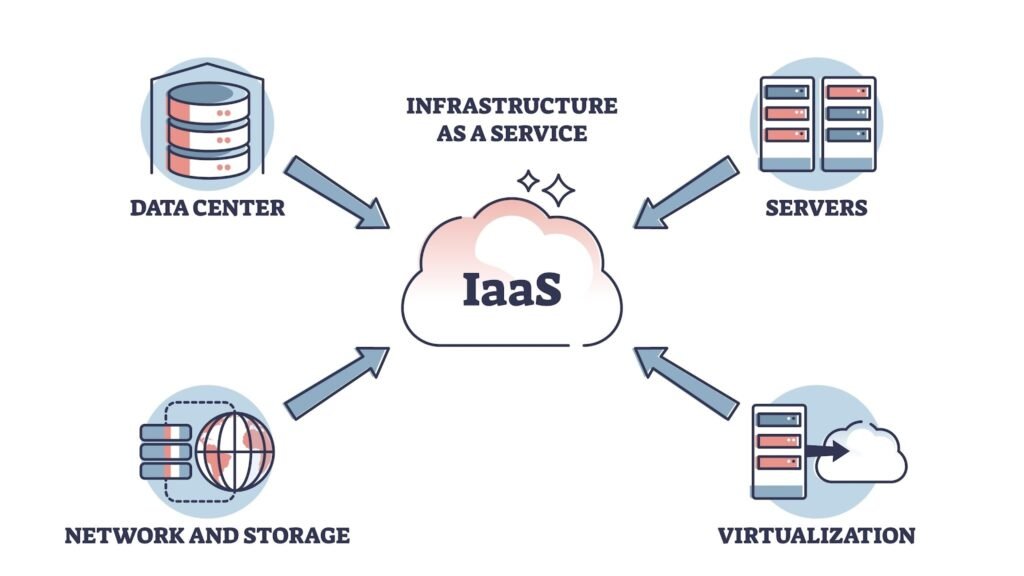
Infrastructure as a Service is a model where an organization rents the core components of computing from a third party provider. This removes the need to buy physical racks, cooling systems, or network switches. Instead, you access these resources through an internet connection and pay for exactly what you consume.
The typical IaaS stack includes several critical elements:
- Virtual machines that act as software-based computers.
- Cloud servers that provide the raw processing power.
- Storage systems designed for massive data durability.
- Networking tools like firewalls and load balancers to manage traffic.
This model creates a specific division of labor known as the shared responsibility model. The cloud provider is responsible for the physical security of the data center, the hardware maintenance, and the power supply.
The customer maintains total control over the operating system, the applications, and the data security configurations. This balance allows a company to remain agile while maintaining the level of control required for complex software builds.
Why Businesses Moved Toward IaaS
In the traditional IT model, adding capacity was a slow and expensive process. A company had to order physical servers, wait for shipping, and then spend days or weeks on manual installation. If traffic spiked unexpectedly, the hardware often could not keep up. If traffic dropped, expensive equipment sat idle and wasted capital.
IaaS eliminated these inefficiencies by making infrastructure elastic. You can spin up a thousand servers in minutes and turn them off just as quickly. This agility has become a survival advantage for businesses that need to respond to market changes in real time.
The move to IaaS also shifts expenses from Capital Expenditure (CapEx) to Operating Expenditure (OpEx). Instead of a massive upfront investment in hardware that depreciates over time, businesses pay a monthly fee based on usage.
This allows startups to access the same high grade infrastructure used by global banks without needing millions of dollars in seed funding for hardware.
The Core Components of IaaS
Virtual Machines
The virtual machine or VM is the workhorse of the cloud. It is a software emulation of a physical computer that runs on the provider hardware. Because multiple VMs can run on a single physical server, the system is incredibly efficient.
Organizations use VMs to run a wide variety of tasks:
- Hosting web applications and database systems.
- Managing Kubernetes nodes for containerized apps.
- Running legacy software that requires a specific operating system.
- Handling intense batch processing jobs.
The primary benefit here is total configuration freedom. A developer can choose the exact amount of CPU, RAM, and Disk Space needed for a specific task. If the requirements change, the VM can be resized or cloned almost instantly.
Cloud Storage
Storage in an IaaS environment is not just a virtual hard drive. It is a highly redundant system designed to ensure that data is never lost, even if an entire data center goes offline. Most providers offer different tiers of storage based on how often the data needs to be accessed.
High performance storage is used for active application data, while cold storage is used for long term backups and compliance archiving. This allows companies to manage costs by moving older data to cheaper, slower storage tiers while keeping critical files on ultra fast SSD-based systems.
Networking Infrastructure
The networking layer of IaaS is what connects different components into a cohesive system. It allows a business to create a Virtual Private Cloud (VPC), which is an isolated section of the cloud where they can define their own IP addresses and subnets.
Core networking components include:
- Load balancers that distribute incoming traffic across multiple servers.
- Virtual firewalls that block unauthorized access.
- Content Delivery Networks (CDNs) that cache data closer to the end user.
- Dedicated interconnects for high speed private links between a physical office and the cloud.
GPU and High Performance Computing
One of the most significant trends in 2026 is the massive demand for GPU infrastructure. Traditional processors are not efficient enough to handle the math required for training large scale AI models. IaaS providers have responded by building specialized clusters of Nvidia or proprietary AI chips.
This has become a lifeline for AI startups. Building a private GPU cluster can cost tens of millions of dollars. Through IaaS, a company can rent that power for the specific weeks or months they need to train a model. This hardware is also essential for video rendering, scientific simulations, and processing massive sets of financial data.
The Biggest IaaS Providers in the Market
A few major players dominate the landscape, each offering a slightly different focus. Choosing a provider often depends on the existing technical stack of a business.
Amazon Web Services (AWS) remains the global leader. Its primary strength is the sheer breadth of its ecosystem. Because it was the first to market, it has the most mature tools and a massive community of developers. It is the go-to choice for companies that need a global footprint and highly customizable infrastructure.
Microsoft Azure has seen incredible growth by focusing on the enterprise. It integrates seamlessly with Windows Server, Active Directory, and Microsoft 365. For large corporations and government agencies already embedded in the Microsoft ecosystem, Azure provides a familiar and compliant path to the cloud.
Google Cloud (GCP) has carved out a niche in data analytics and AI. Because Google built much of the technology that powers the modern web, such as Kubernetes. Their cloud is often seen as the most technically advanced for high performance networking and container management. It is a popular choice for tech-heavy startups and organizations focused on deep learning.
Where IaaS Is Used in the Real World
The versatility of IaaS allows it to power diverse industries with wildly different technical requirements. It is rarely used in a vacuum. Instead, it is the engine behind the services we use daily.
Streaming Platforms
Streaming services require a level of scalability that physical hardware simply cannot provide. These platforms experience massive, unpredictable traffic spikes during live events or new content releases.
To manage this, they use auto-scaling groups. When the system detects a rise in viewership, it automatically triggers the creation of hundreds of new virtual machine instances.
Once the spike ends, the system shuts them down to save money. This elasticity ensures that the service remains online without the company paying for thousands of idle servers during off-peak hours.
Ecommerce Businesses
Modern retail relies on IaaS to survive high-stakes shopping windows like Black Friday or holiday sales. In these scenarios, the cost of a few minutes of downtime can be measured in millions of dollars.
Ecommerce firms use the cloud to:
- Distribute global traffic through load balancers.
- Secure customer payment data in encrypted cloud storage.
- Rapidly deploy geographic mirrors of their site to reduce latency for international shoppers.
AI Startups and GPU Infrastructure
The current artificial intelligence boom would be impossible without the IaaS model. Training a modern large language model requires thousands of high-end GPUs working in parallel. Very few companies have the capital to build their own supercomputing clusters.
By renting GPU-optimized instances, AI researchers can:
- Access the latest hardware as soon as it is released.
- Scale up their computing power for the training phase and scale down for the inference phase.
- Utilize high-speed networking backbones that are necessary for distributed deep learning.
Why Many Businesses Still Misconfigure IaaS
A common and dangerous misconception is that moving to the cloud automatically makes a system secure. This misunderstanding often leads to catastrophic data breaches.
The Shared Responsibility Model dictates that while the provider secures the physical building and the hypervisor, the user is responsible for everything inside the virtual environment.
The most common points of failure include:
- Open Storage Buckets: Failing to set proper permissions on cloud storage, making sensitive data public.
- Identity and Access Management (IAM): Giving users or applications more permissions than they actually need to function.
- API Key Exposure: Accidentally uploading secret keys to public code repositories.
Because of these complexities, Cloud Security Posture Management (CSPM) has become a critical discipline. Companies now use automated tools to constantly scan their infrastructure for these types of human errors.
The Hidden Cost Problem
While IaaS is marketed as a cost-saving measure, it can quickly become more expensive than on-premise hardware if it is not managed carefully. The ease of spinning up new resources can lead to cloud sprawl, where unused or forgotten instances continue to run and generate bills.
Major sources of unexpected costs include:
- Egress Fees: Charges for moving data out of the cloud and onto the internet.
- Overprovisioning: Choosing a server that is much more powerful than the task requires.
- Unattached Storage: Paying for virtual disks that are no longer connected to any active server.
To combat this, many organizations now employ FinOps teams. These professionals use data analytics to track cloud spending and find opportunities to right-size their infrastructure. They often use Spot Instances—unused cloud capacity offered at a steep discount—to run non-critical tasks and reduce the monthly bill.
Multi-Cloud and Hybrid Cloud Are Becoming the New Standard
In the early days of cloud computing, most companies picked one provider and stayed there. Today, mature organizations are moving toward multi-cloud and hybrid cloud strategies.
Multi-cloud involves using different providers for different tasks. For example, a company might use AWS for its core web hosting but use Google Cloud for its machine learning pipeline. This prevents vendor lock-in and provides a fallback if one provider experiences a major regional outage.
Hybrid cloud connects public cloud resources with a company’s own private data center. This is common in finance and healthcare, where sensitive customer data must stay on a physical server the company owns, while the scalable application layer runs in the public cloud.
Kubernetes and the Shift to Programmable Infrastructure
The introduction of Kubernetes changed the way we interact with IaaS. We are moving away from managing individual servers and toward managing clusters of containers.
In this model, the developer describes the desired state of the infrastructure in a file, and Kubernetes works to make the actual environment match that description. This has turned infrastructure into code. It allows for DevOps workflows where infrastructure changes are tested and deployed with the same rigor as software updates.
This shift has made infrastructure more reliable and easier to replicate across different regions. It also allows for seamless updates, where a new version of an app is rolled out server-by-server without the user ever noticing a gap in service.
The AI Boom Is Reshaping the Entire IaaS Market
Artificial intelligence is no longer just a software feature. It has become a massive consumer of physical infrastructure. The demand for generative AI and large language models has forced a fundamental redesign of cloud data centers. Traditional CPU-centric servers are being replaced or supplemented by high-density GPU clusters.
This shift has created a global competition for compute capacity. Major IaaS providers are investing billions of dollars to secure the latest hardware and power supplies needed to run these workloads. They are also developing specialized networking backbones capable of moving massive amounts of data between servers at speeds that were previously unnecessary.
The impact of AI on the market includes:
- Development of liquid cooling systems to handle the extreme heat of AI chips.
- Integration of AI-specific storage that can feed data to processors without bottlenecks.
- Creation of pre-trained model environments where developers can start building immediately.
When IaaS Makes Sense for a Business
Deciding to use IaaS is a strategic choice that depends on the technical maturity and scaling needs of a business. It is the ideal choice for organizations that require a high degree of control over their computing environment.
IaaS is typically the best fit for:
- Software-as-a-Service (SaaS) providers who need to build their own platforms.
- Rapidly scaling startups that cannot predict their future hardware needs.
- Large enterprises moving through a digital transformation phase.
- Companies with variable workloads that experience extreme seasonal peaks.
- Research and development teams that need temporary, high-power environments for testing.
For these businesses, the flexibility and global reach of the cloud far outweigh the complexity of managing the virtualized systems.
When IaaS May Not Be the Best Choice
Infrastructure as a Service is powerful, but it is not a universal solution. It requires a dedicated team of engineers who understand networking, security, and system administration. If a company lacks this expertise, IaaS can become a liability.
IaaS may not be ideal if:
- Operational simplicity is the priority: A small business might be better served by SaaS tools that require zero management.
- Workloads are static and predictable: In some cases, owning hardware for a constant, unchanging task is actually cheaper over five years.
- Regulatory or latency requirements are extreme: Some high-frequency trading or high-security government tasks require physical hardware on-site.
- The technical team is very small: Managing a cloud environment is a significant time commitment that can distract from core product development.
IaaS vs PaaS vs SaaS: The Hierarchy of Control
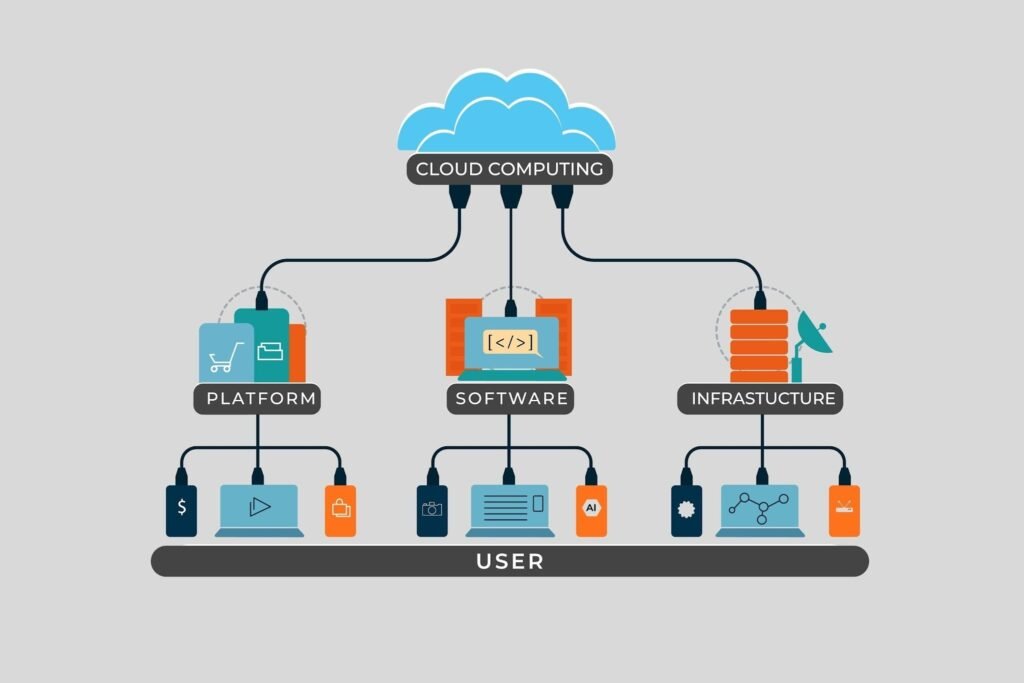
Understanding where IaaS fits in the broader cloud landscape is essential for making the right architectural decision. Each model offers a different trade-off between control and convenience.
| Model | What You Manage | What the Provider Manages | Best For |
| IaaS | Applications, Data, OS, Middleware, Runtime | Virtualization, Servers, Storage, Networking | Maximum control and custom architecture. |
| PaaS | Applications and Data | OS, Middleware, Runtime, Infrastructure | Rapid application development and deployment. |
| SaaS | Nothing (You are the end user) | The entire software stack and infrastructure | General business productivity and specific tasks. |
- IaaS offers the most freedom. You can install any software and configure the network exactly how you want.
- PaaS (Platform as a Service) simplifies this by handling the operating system and scaling, leaving you to focus only on code.
- SaaS (Software as a Service) is the most restrictive but easiest to use, providing a finished product like an email service or a CRM.
What Many Technical Teams Realize Too Late
The transition to IaaS is often sold as a way to simplify IT, but in reality, it often shifts the nature of the complexity. Instead of fixing physical cables or replacing fans, engineers now spend their time managing access policies, API integrations, and cost optimization algorithms.
Successful cloud adoption depends on moving away from a manual mindset and embracing automation. If you manage your cloud servers the same way you manage physical servers, you will miss out on the primary benefits of the cloud. The most mature organizations treat their infrastructure as disposable, allowing them to rebuild or scale their entire environment with a single command.
Final Thoughts
Infrastructure as a Service has moved from a niche alternative for startups to the central nervous system of the global digital economy. It enables innovation at a speed that was impossible two decades ago.
By removing the physical barriers to computing, IaaS allows any company with a credit card and a good idea to access the same power as a Fortune 500 corporation.
As we move further into the era of AI-driven computing, the role of IaaS will only grow. The businesses that succeed will be those that understand how to balance the immense power and flexibility of the cloud with the rigorous security and cost management needed to keep it sustainable.
Frequently Asked Questions
What does IaaS mean in cloud computing?
It stands for Infrastructure as a Service. It is a model where you rent computing resources like servers and storage over the internet instead of buying physical hardware.
What is an example of IaaS?
The most common examples are Amazon EC2, Microsoft Azure Virtual Machines, and Google Compute Engine.
Is IaaS more secure than on-premise hardware?
The cloud is generally more secure physically, but it is easier to make a configuration mistake. Security is a shared responsibility between you and the provider.
Why is AI driving the IaaS market?
AI requires massive amounts of processing power and GPU hardware that is too expensive for most companies to buy and maintain on their own.
How do I control costs in IaaS?
Use automated scaling to turn off unused resources, monitor for cloud sprawl, and use FinOps practices to analyze your monthly spending data.