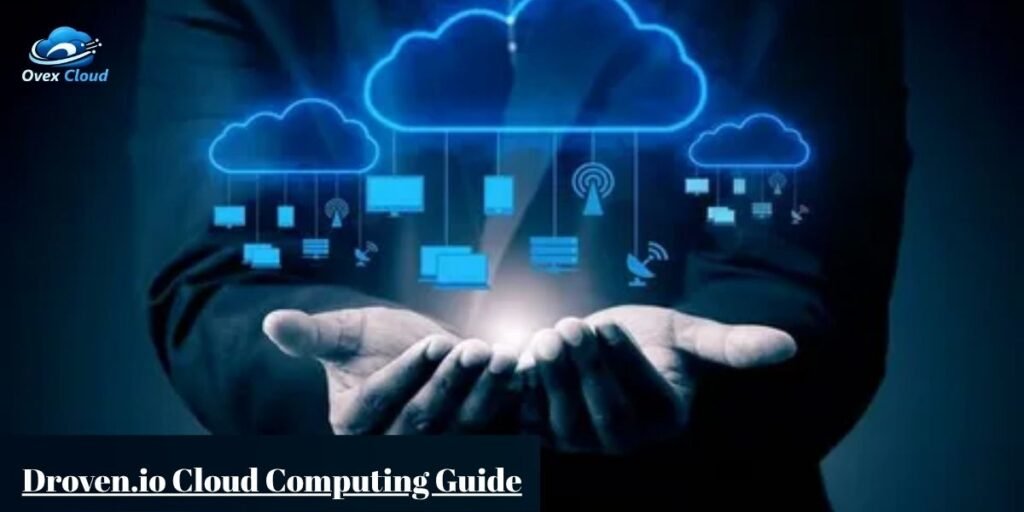
Cloud computing has transitioned from a progressive corporate strategy to the baseline infrastructure of the modern digital economy. Everyday activities like streaming media on demand, updating collaborative document workspaces, and accessing distributed databases rely entirely on remote server networks. Because organizations across all sectors are prioritizing remote deployment, public interest in specialized training portals has increased. This surge in demand explains why the Droven.io Cloud Computing Guide has become a frequent search term for individuals navigating introductory tech literature.
Understanding the utility of this resource requires a clear look at what the platform actually does. Users frequently mistake educational blogs for functional software systems or infrastructure networks. Evaluating this guide requires separating foundational theory from practical cloud architecture, ensuring that students and technical professionals invest their time in verified training materials.
What Is Droven.io?
Droven.io operates exclusively as an educational technology content platform. The website publishes analytical articles, conceptual breakdowns, and informational overviews focusing on enterprise technology ecosystems. Its core editorial subjects include artificial intelligence engineering, infrastructure automation, DevOps pipelines, and data privacy frameworks.
The site does not function as a commercial cloud vendor. It does not lease virtualized hardware, maintain physical data centers, or sell software-as-a-service licenses. The platform acts as an independent repository of educational media, targeting readers who need complex engineering topics translated into accessible, non-proprietary terms.
Does Droven.io Have a Cloud Computing Guide?
The platform hosts a dedicated introductory manual intended for readers seeking foundational literacy in distributed systems. Rather than preparing an engineer for a specific production environment, this manual maps out the core mechanics that govern all modern networks. It addresses architectural frameworks, financial implications of remote infrastructure, and basic network defense definitions.
This guide serves as a conceptual primer rather than a technical manual. It avoids code-level implementation details and proprietary command-line instructions. Instead, it offers an initial framework to help students understand industrial documentation before they begin hands-on technical training.
Is Droven.io a Cloud Provider?
A common misconception among beginner students is treating Droven.io as an active cloud service vendor. The platform does not sell compute instances, object storage buckets, or managed database clusters. It lacks the hardware infrastructure, hypervisor systems, and global fiber networks that define public or private cloud utilities.
The site belongs strictly to the tech media and education sector. It does not compete with infrastructure providers, virtualization platforms, or local data hosting facilities. Its sole output is written instructional text and conceptual reference material.
What Is Cloud Computing?
Cloud computing is the on-demand delivery of specialized computational resources over the internet, utilizing a flexible utility pricing model. Instead of buying, maintaining, and housing localized physical servers, businesses rent access to processing power, storage capacity, and advanced database architectures from global technology vendors. This model shifts IT spending from heavy capital investments in hardware to predictable operating expenses.
- On-Demand Self-Service: Developers can provision processing power and storage instantly without requiring manual intervention from the hardware vendor.
- Broad Network Access: All hosted services remain accessible across diverse geographic locations through standard web protocols and device interfaces.
- Resource Pooling: Physical hardware resources are dynamically allocated to multiple independent clients using advanced segregation models.
- Rapid Elasticity: Computational infrastructure scales up or down automatically to match real-time user traffic and workload demands.
- Measured Service: Systems track usage metrics down to the second or gigabyte, ensuring clients pay only for active consumption.
A practical example of this mechanism is cloud-based file storage systems. When a user uploads a file, the data bypasses local hard drives and moves across encrypted networks directly into remote storage arrays. This allows the file to be accessed, edited, and synchronized from any authorized device worldwide, demonstrating distributed computing in its simplest form.
How Cloud Computing Works
The foundation of cloud computing relies on massive, highly secure data centers managed by global technology companies. These physical facilities contain rows of high-density server racks, enterprise storage arrays, and advanced networking hardware. To transform these physical machines into flexible resources, engineers utilize software-driven virtualization technologies.
Virtualization introduces an abstraction layer called a hypervisor. This specialized software installs directly onto physical server hardware to split its centralized processing unit, memory, and storage into isolated segments. Each individual segment operates as an independent virtual machine capable of running its own operating system and dedicated software applications.
When an organization launches a web platform in a cloud environment, the application runs inside these isolated virtual instances. As user traffic spikes, monitoring software detects the increased load and automatically spins up additional virtual machines across the data center network to distribute the strain. Once traffic returns to normal, the system terminates the extra instances to prevent unnecessary charges, optimizing resource efficiency without requiring manual hardware adjustments.
Types of Cloud Computing
Selecting an infrastructure strategy requires analyzing security regulations, budgetary limits, and operational scale. Organizations distribute workloads across different environments depending on how much control they want over the underlying hardware.
Public Cloud
Public cloud services run on shared physical infrastructure owned and managed by third-party vendors. Multiple corporate clients share the same physical server components, though their digital environments remain completely isolated from one another through logical security boundaries.
- Lower Capital Investment: Businesses eliminate the need to purchase physical hardware, reducing upfront infrastructure costs.
- On-Demand Scalability: Computing power and storage scale up or down automatically based on real-time application traffic.
- Global Footprint: Applications can be deployed across multiple worldwide data centers with minimal configuration latency.
Private Cloud
A private cloud consists of infrastructure dedicated exclusively to one organization. It can reside inside a company’s physical data center or be hosted by a third-party service provider that guarantees isolated single-tenant hardware.
- Granular Infrastructure Control: Internal IT teams customize hardware configurations, networking equipment, and security protocols to exact corporate standards.
- Enhanced Regulatory Compliance: Single-tenant isolation helps strict industries meet data residency laws and strict sovereignty requirements.
- Predictable Performance: Dedicated physical resources eliminate performance variance caused by competing workloads on shared servers.
Hybrid Cloud
Hybrid models orchestrate public cloud services and private environments into a unified, connected infrastructure. This configuration relies on standardized management software to allow workloads to shift fluidly between distinct environments.
- Workload Optimization: Companies run highly sensitive core operations on secure private systems while offloading variable, public-facing applications to external networks.
- Cloud Bursting: When application demand spikes beyond local infrastructure capacity, systems automatically route excess traffic to public environments.
- Legacy Preservation: Enterprises modernize consumer applications without abandoning functional, older database systems that cannot be migrated easily.
Multi-Cloud
A multi-cloud strategy involves using independent services from different public cloud vendors simultaneously. Instead of relying on a single provider for every requirement, companies select specific services from separate ecosystems.
- Vendor Lock-In Mitigation: Distributing assets across multiple providers prevents a business from becoming dependent on a single vendor’s pricing and architecture.
- Strategic Capability Selection: Engineering teams can use one vendor for advanced artificial intelligence APIs and another for global relational databases.
- System Resilience: If a major regional service outage disrupts one provider, critical operations fail over to an unaffected environment run by a competitor.
Cloud Service Models
Cloud architecture is organized into three distinct service tiers. Each model determines the division of technical responsibilities between the external service provider and the internal engineering team.
Infrastructure as a Service (IaaS)
IaaS offers fundamental computing resources on demand, including raw processing power, virtual storage arrays, and software-defined networking setups. The provider maintains the physical facilities, power supplies, and virtualization hypervisors, leaving everything else to the client.
- Operating System Customization: System administrators choose, install, patch, and maintain their preferred Linux distributions or Windows Server environments.
- Network Topology Design: Engineers manually configure firewalls, assign static IP addresses, build virtual private networks, and manage routing tables.
- Data Security Architecture: The customer remains fully responsible for application security, middleware configurations, and runtime access permissions.
Platform as a Service (PaaS)
PaaS removes the need for direct operating system and hardware management by providing pre-configured development and deployment environments. The service vendor handles runtime software, automated scaling, middleware components, and backend database engines.
- Developer-Centric Workflow: Software engineers write application code and push updates directly to production without configuring underlying servers.
- Automated Environment Maintenance: The service provider automatically applies critical operating system security patches and manages scaling configurations.
- Integrated Deployment Pipelines: Built-in tools streamline version control integration, application testing, and performance monitoring.
Software as a Service (SaaS)
SaaS delivers fully functional, end-user software applications directly through a web browser or mobile interface. The service provider completely manages the infrastructure, source code, data storage, and server performance behind the application.
- Zero Local Installation: End users access the software without downloading massive application files or configuring local execution environments.
- Centralized Data Management: Customer data stays securely synchronized across the provider’s global network, enabling real-time collaboration.
- Subscription-Based Consumption: Subscription pricing models lower entry costs and provide instant access to feature updates.
Why Modern Businesses Depend on Cloud Computing
Modern business operations rely heavily on cloud infrastructure to maintain market competitiveness and operational speed. Moving away from local data hosting allows companies to optimize resource usage and scale rapidly.
- Operational Agility: Engineering teams can spin up experimental testing environments in minutes rather than waiting months for hardware procurement.
- Cost Efficiency Optimization: Shifting IT budgets from capital hardware investments to operational expenditures matches technology costs directly with business revenue.
- Disaster Recovery Preparedness: Automated data replication across multiple geographical regions ensures business continuity during local power failures or hardware breakdowns.
- Global Expansion Capability: Companies can launch software products globally by deploying files to edge networks closer to international users.
Examples of Cloud Computing
Distributed systems power many consumer tools and enterprise applications that people interact with every day. These platforms rely on remote computing networks to process requests and deliver data globally.
- Digital Media Streaming: Entertainment apps stream high-definition video and audio files by pulling data from distributed content delivery networks based on user location.
- Productivity Workspace Ecosystems: Digital document tools allow remote team members to write, edit, and comment on files at the same time by saving progress to a central database.
- Enterprise Communications Tools: Team messaging applications and video conferencing services route real-time audio and video packets through low-latency cloud networks.
- Cloud File Repositories: Storage services sync local files automatically to remote servers, providing an offsite backup accessible from any internet-connected device.
- Web-Based Design Platforms: Creative applications process complex graphic rendering tasks on powerful remote servers rather than relying on a user’s local hardware.
Keeping Data Safe in the Cloud
Migrating computational workloads to external infrastructure shifts the physical security burden to the vendor, but it does not absolve an organization of its data protection responsibilities. Cloud security operates on a shared responsibility model. Under this framework, the infrastructure vendor guarantees the security of the underlying hardware, virtualization hypervisors, and physical data center facilities, while the corporate client remains entirely accountable for securing the data, applications, and access configurations inside that environment.
Implementing robust digital boundaries requires strict adherence to modern identity management frameworks. Organizations protect their cloud perimeters by enforcing multi-factor authentication across all user accounts, creating a mandatory secondary verification barrier against credential theft. This protection is paired with granular identity and access management configurations, which apply role-based access controls to ensure employees only interact with the specific resources required for their operational tasks.
Data protection also relies heavily on cryptographic safeguards for both information in transit and information at rest. Advanced encryption standards convert files into unreadable ciphertext before they move across external networks or settle into remote storage arrays, rendering intercepted data useless to unauthorized actors. To maintain absolute resilience against ransomware or accidental deletion, engineering teams deploy continuous system monitoring tools and establish automated, geographically isolated data backups that permit rapid recovery during a security incident.
Where Should You Learn Cloud Computing
While introductory platforms like Droven.io outline fundamental networking definitions, achieving technical competency requires studying structured material from primary technology creators. The companies that design, construct, and operate global cloud networks publish exhaustive educational programs containing guided paths, theoretical lectures, and sandboxed execution environments.
AWS Skill Builder
Amazon Web Services provides a centralized training portal called AWS Skill Builder, designed to guide students from foundational architecture concepts to specialized engineering domains. The platform hosts free digital courses covering basic cloud concepts alongside paid subscriptions that unlock prescriptive learning plans, practical architecture challenges, and official exam preparation media for industry certifications.
Microsoft Learn
For individuals focusing on enterprise infrastructure deployment, Microsoft Learn provides an expansive catalog of self-paced tutorials tailored to the Azure ecosystem. The portal integrates step-by-step documentation with interactive, browser-based coding environments, allowing students to practice configuring virtual networks and managing serverless databases without incurring personal hardware costs.
Google Cloud Skills Boost
Google Cloud Skills Boost focuses heavily on hands-on lab exercises, giving students direct access to actual cloud consoles for fixed periods. This system allows learners to build functional data pipelines, deploy containerized applications, and execute machine learning workflows using real cloud resources, providing practical validation for theoretical principles.
Developing true professional proficiency requires moving past passive reading and initiating active projects within live environments. Most public cloud vendors offer a free-tier account structure, granting students limited access to virtual servers, database engines, and storage containers for a year at no cost. Aspiring engineers utilize these sandboxed accounts to deploy personal code, build secure network architectures, and gain the practical troubleshooting experience required in corporate environments.
Benefits of Cloud Computing
Transitioning corporate workloads to distributed networks delivers measurable financial and operational advantages over traditional on-premise infrastructure. These operational improvements help modern enterprises remain highly responsive to changing market conditions.
Cost Savings
Organizations avoid the massive upfront capital expenses required to purchase high-density server hardware, physical networking switches, and cooling systems. Instead, cloud utilities operate on a flexible operational expense model where businesses pay exclusively for the processing seconds, network bandwidth, and storage gigabytes they consume.
Scalability
Distributed systems adapt instantaneously to fluctuating workload demands through automated scaling systems. If a digital storefront experiences a massive influx of traffic during a global promotional event, the underlying infrastructure provisions additional virtual machines within minutes to maintain peak site performance, automatically tearing down those excess resources when consumer traffic normalizes.
Flexibility and Deployment Velocity
Engineering teams accelerate product deployment lifecycles by removing the logistical friction associated with physical hardware procurement. A developer can configure, launch, and connect a global network of virtual database servers in a few clicks, allowing companies to transition software innovations from initial code concepts to production environments with unprecedented speed.
Common Uses of Cloud Computing
Distributed architecture underpins almost all scalable digital systems, operating silently behind user interfaces to manage intensive computational tasks.
Enterprise Application Hosting
Modern businesses bypass localized server maintenance by launching their corporate applications, internal content management databases, and transactional business tools inside secure public or private cloud networks. This deployment model guarantees continuous global availability and simple maintenance updates.
Big Data Analytics and AI Modeling
Processing massive datasets requires immense computational capacity that standard local networks cannot provide. Cloud environments allow organizations to spin up massive data lakes and parallel processing clusters on demand, enabling data engineers to analyze consumer patterns, run complex simulations, and train deep learning artificial intelligence models efficiently.
Content Delivery and Media Hosting
Global entertainment networks deliver stutter-free video streams and rapid web downloads by caching heavy media files on distributed edge storage servers located close to terminal consumers. This decentralized storage strategy reduces latency, protects core source systems from traffic spikes, and ensures smooth user experiences regardless of physical distance.
Challenges of Cloud Computing
Despite its clear operational advantages, moving infrastructure away from local data centers introduces unique architectural challenges and hidden liabilities that require careful management.
- Internet Connection Dependency: Because cloud environments are hosted in remote data centers, clients rely entirely on external internet connectivity to manage their applications or retrieve files. A regional fiber-optic line cut or an internet service provider outage can completely disconnect a company from its core operational software.
- Complex Vendor Lock-In: Migrating data and applications out of a specific provider’s ecosystem becomes difficult once developers build systems around proprietary application programming interfaces, database engines, and data structures. Transferring terabytes of data over networks also incurs significant egress fees, making platform transitions financially restrictive.
- Unpredictable Cost Accumulation: While utility pricing prevents heavy upfront hardware investments, poorly configured auto-scaling rules, unmonitored development servers, and abandoned storage volumes can cause monthly operational bills to skyrocket unexpectedly.
Navigating these challenges requires internal engineering teams to build resilient architectures that assume infrastructure components will eventually fail. Organizations use multi-region deployments, automated spending alarms, and open-source containerization frameworks to minimize vendor dependency and maintain control over their distributed assets.
Who Should Learn Cloud Computing?
As modern industries continue to phase out physical server rooms, cloud design and maintenance skills have become a foundational requirement across many professional technical roles.
Software Developers and DevOps Engineers
Modern software engineers no longer write code in isolation from the execution environment. Understanding how to build microservices, manage containerized deployments, and utilize serverless execution models allows developers to write code that runs efficiently on distributed hardware, while DevOps specialists use these skills to build automated continuous integration and delivery pipelines.
Data Engineers and AI Specialists
Training modern machine learning models and processing petabytes of corporate information requires immense computational power. Data professionals learn cloud architecture to spin up on-demand graphics processing clusters, manage distributed data warehouses, and build automated analytical pipelines that scale dynamically based on ingestion speeds.
Cybersecurity Professionals and IT Administrators
Migrating corporate assets to shared infrastructure alters the threat landscape significantly. System administrators and information security engineers must understand software-defined networking, cloud identity boundaries, and remote audit logging configurations to protect their systems from advanced external threats and ensure compliance with global data privacy regulations.
Is the Droven.io Cloud Computing Guide Worth Reading?
The Droven.io guide serves as a practical, high-level overview for students and business managers who need a conceptual understanding of cloud definitions without getting bogged down in implementation complexities. Its plain-language breakdowns of service models and deployment styles provide a solid starting point for someone who is completely new to modern network vocabulary.
However, aspiring technical professionals must understand the educational limitations of an introductory blog article. The text contains zero hands-on configuration labs, code scripts, or command-line instructions, meaning it cannot prepare a reader for real-world infrastructure deployment or technical certification exams. It works well as a conceptual primer, but students must transition to official cloud documentation and active lab sandboxes to build marketable engineering skills.
Best Way to Learn Cloud Computing
Achieving professional competency in distributed infrastructure requires following a structured learning path that balances theoretical fundamentals with hands-on technical execution.
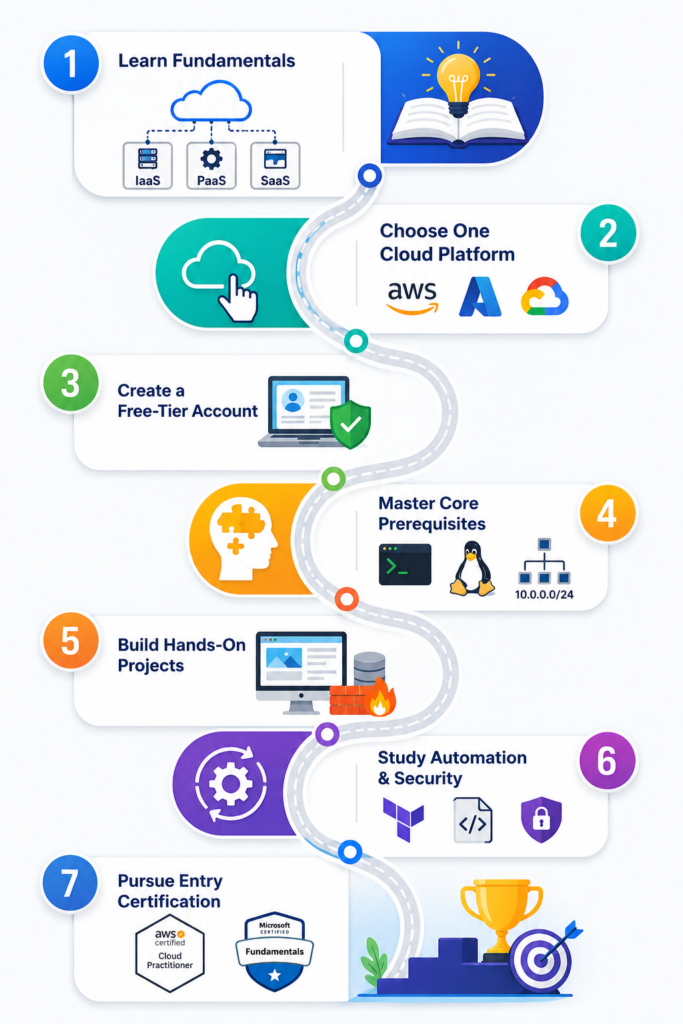
Following this progression transforms abstract knowledge into practical skills. By focusing heavily on personal projects and automation scripts, students build the technical confidence and troubleshooting abilities required to manage real enterprise networks.
Final Thoughts
The Droven.io Cloud Computing Guide offers a helpful introductory overview of how distributed tech ecosystems work, making it a viable starting point for beginners building initial technical literacy. However, because the platform is an educational media site rather than an active cloud service vendor or structured technical academy, its content remains strictly theoretical.
True professional advancement in this field depends entirely on active experimentation. Aspiring network architects, data engineers, and security specialists should use introductory content to grasp core concepts, but then quickly shift their focus to official cloud portal documentation, cloud-native sandboxes, and actual deployment projects where they can gain the hands-on troubleshooting experience required in modern engineering roles.