
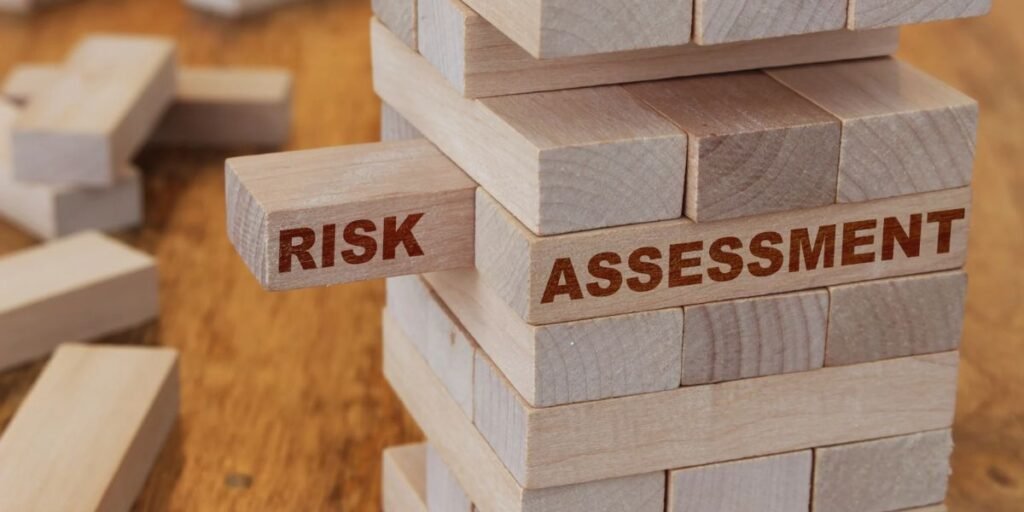
Every consequential corporate choice carries inherent uncertainty, whether an enterprise is launching a mission-critical product, approving a multi-million-dollar capital investment, selecting a cloud infrastructure platform, expanding into an unchartered international market, or mounting an emergency response to an active cyber intrusion. When two competing organizations face identical market disruptions, the difference between the one that recovers swiftly and the one that suffers catastrophic financial failure rarely comes down to sheer luck. It stems directly from the rigor, discipline, and structural quality of the risk assessment executed before capital and resources were ever committed.
Risk assessment is fundamentally misunderstood when viewed as a bureaucratic speed bump designed to paralyze innovation or eliminate uncertainty. The primary objective of an effective risk evaluation is never to achieve zero risk. Instead, its true purpose is to provide decision-makers with a granular, transparent understanding of uncertainty so leadership can execute strategic maneuvers with calculated confidence.
This guide examines how elite organizations approach risk evaluation not as a static compliance exercise, but as a dynamic engine for strategic clarity. By analyzing how different industries model threats, manage cognitive biases, and translate risk data into decisive operational actions, leadership teams can transform uncertainty from a liability into a competitive advantage.
Why Every Important Decision Begins With Risk
Uncertainty is an unavoidable constant across every commercial transaction, technical deployment, and operational pivot. Every strategic decision involves profound trade-offs where capturing upside requires exposing the enterprise to specific downside exposures. Because perfection is mathematically impossible, good decisions are never risk-free decisions.
Instead, a high-quality decision is defined by the deliberate evaluation of potential outcomes before execution. When executive leadership evaluates an investment or structural shift through a formal risk lens, they trade blind hope for informed probability. This distinction elevates risk assessment from an administrative audit into a core driver of decision quality.
Consider how this principle manifests across diverse sectors:
- Business & Strategy: Entering a new geographic market requires evaluating local regulatory frameworks, currency volatility, and incumbent competitor pushback.
- Healthcare: Introducing a new surgical robotics platform requires weighing clinical efficacy against device failure probabilities and patient safety hazards.
- Finance: Deploying algorithmic trading models requires stress-testing portfolio performance against extreme market liquidity contractions.
- Construction: Constructing a high-rise commercial complex requires modeling extreme weather contingencies, structural load tolerances, and supply chain delays.
- Cybersecurity: Architecting corporate networks requires assuming perimeter breaches and evaluating containment speed against potential data exfiltration losses.
- Public Policy: Designing municipal infrastructure requires assessing long-term climate vulnerability, population shifts, and economic resilience.
Understanding What Risk Assessment Really Does
Stripping away corporate jargon, a formal risk assessment is simply a structured, repeatable framework designed to answer core operational questions before an incident forces a reactive response. It replaces emotional guessing with methodical inquiry.
An effective risk assessment answers questions such as:
- What critical assets, operational workflows, or revenue streams are we trying to protect?
- What could realistically go wrong during execution or operation?
- Why or through what vector could this failure happen?
- How statistically likely is this adverse event to occur?
- What would the immediate and cascading operational consequences look like if it did happen?
- Can we proactively modify our architecture or processes to reduce the likelihood of occurrence?
- Can we implement engineering or contractual controls to reduce the severity of the impact?
- After applying all feasible mitigations, is the residual risk level acceptable to executive leadership and the board of directors?
By addressing these questions systematically, organizations replace vague anxieties with actionable variables that can be measured, monitored, and managed.
The Four Questions That Drive Every Effective Risk Assessment
Rather than relying on rigid, multi-page compliance checklists that invite box-checking, experienced risk consultants structure their evaluations around four intuitive cognitive phases. This methodology anchors the assessment in practical operational reality.
- The first phase asks: What are we trying to protect? This forces teams to inventory their crown jewels, whether those assets are proprietary source code, patient health records, physical manufacturing equipment, or brand reputation.
- The second phase asks: What could realistically happen? This shifts focus from theoretical, sci-fi catastrophic scenarios to plausible threat vectors based on current operational realities and historical threat intelligence.
- The third phase asks: How serious would the consequences be? This evaluates the financial, regulatory, operational, and human impact if the risk materializes.
- The fourth phase asks: Which risks deserve attention first? This prioritization step ensures that limited engineering budgets and executive bandwidth are concentrated on high-severity, high-probability exposures rather than minor administrative nuisances.
How Experienced Teams Evaluate Risk
Relying exclusively on quantitative models or pure qualitative intuition creates massive blind spots in corporate decision-making. Highly mature organizations combine multiple distinct perspectives to form a comprehensive risk profile.
Expert judgment provides the qualitative baseline, drawing on the hard-won experience of senior operators who have navigated past market crashes or system outages. This qualitative insight is immediately cross-referenced against historical evidence, internal incident logs, and external industry failure databases.
Quantitative teams integrate operational telemetry and probability models, utilizing historical performance metrics to calculate exact failure rates and financial exposure distributions. Financial analysis stress-tests these models against worst-case capital liquidity scenarios.
Furthermore, scenario planning workshops and cross-functional interviews bring together engineering, legal, finance, and product teams to stress-test assumptions. Numbers alone rarely tell the complete story because financial models cannot capture shifting human behaviors, shifting geopolitical alliances, or unprecedented market black swans. Combining empirical data with rigorous human inquiry is what separates resilient enterprises from vulnerable ones.
Why Some Organizations Make Better Decisions Than Others
The global enterprise risk management market is expanding rapidly, projected to grow from $5.14 billion in 2025 to $7.76 billion by 2030 at a compound annual growth rate (CAGR) of 8.6%, driven largely by complex digital transformations and evolving threat landscapes. Yet two companies using identical risk software can experience vastly different outcomes. The differentiator is organizational maturity.
Organizations that consistently make superior decisions foster a corporate culture where bad news travels fast and dissent is welcomed. Their governance structures ensure that risk insights flow directly to the C-suite and the board of directors rather than dying in middle management silos. Cross-functional collaboration breaks down traditional walls between IT security, legal compliance, and business units, ensuring a holistic view of enterprise exposure.
Crucially, these organizations maintain a leadership-backed willingness to challenge entrenched assumptions. They do not treat risk assessments as compliance hurdles to be cleared. Instead, they view them as vital diagnostic tools that protect long-term enterprise value.
Looking Beyond Likelihood and Impact
Traditional risk matrices plot only two variables: likelihood and impact. While useful as a starting point, experienced practitioners know this two-dimensional approach misses critical operational dynamics. Modern risk analysis incorporates several advanced dimensions to capture true exposure:
- Velocity: How rapidly a risk develops from a faint signal into an active crisis, such as a zero-day software exploit spreading across enterprise servers within minutes.
- Persistence: How long the adverse effects linger within the organization after the initial shock occurs.
- Interconnected Risks: How a failure in one domain, such as a logistics bottleneck, triggers downstream failures in customer service, revenue collection, and regulatory compliance.
- Cascading Failures: Unanticipated chain reactions where minor component failures multiply across interdependent enterprise systems.
- Uncertainty Levels: Recognizing the confidence interval surrounding the risk data itself, acknowledging what the organization does not know.
- Recovery Capability and Business Resilience: Measuring how fast critical operations can pivot, adapt, or restore functionality when controls fail.
Common Decision Biases That Undermine Risk Assessment
Even the most sophisticated risk frameworks can be derailed by human cognitive biases if leadership teams do not actively audit their own decision-making processes.
- Optimism Bias: The persistent belief that negative events only happen to competitors and that our strategic initiatives possess charmed immunity.
- Confirmation Bias: The danger of actively seeking out data points that validate a pre-existing executive preference while dismissing contradictory risk warnings.
- Overconfidence: Unfounded certainty in proprietary forecasts, leading teams to underfund contingency reserves and emergency buffers.
- Recency Bias: Overweighting risks that made recent headlines while ignoring structural, low-frequency hazards that haven’t occurred lately.
- Anchoring: Allowing the first piece of information presented during a risk workshop to disproportionately anchor all subsequent evaluations.
- Groupthink: The tendency for team members to suppress dissenting risk warnings to maintain harmony with dominant executive voices.
Experienced risk assessors combat these biases by enforcing anonymous voting during risk scoring, appointing devil’s advocates during strategic reviews, and forcing teams to build explicit pre-mortems assuming a project has completely failed before launch.
Risk Assessment Across Different Industries
While the core principles of risk evaluation remain consistent, their practical application varies significantly across industrial sectors, reflecting unique regulatory and operational realities.
In cybersecurity, risk assessments focus on vulnerability patching cadences, multi-factor authentication coverage, and intrusion detection dwell times. According to IBM’s security research, organizations take an average of 241 days to identify and contain a data breach, making proactive risk modeling an economic imperative.
In healthcare, where data breach costs average $7.42 million annually, risk evaluations prioritize patient safety, clinical device validation, and strict HIPAA data governance.
In financial services, where sector incidents average $5.56 million per breach, risk teams model credit exposure, liquidity stress tests, and real-time financial crime detection to prevent systemic insolvency.
In manufacturing and supply chain operations, risk assessments map single-source component dependencies, factory floor safety hazards, and inventory buffer resilience to prevent costly production line halts.
In construction and engineering, evaluations center around worker safety compliance, geotechnical stability reports, and fixed-price contract overrun tolerances.
Across all these domains, the universal goal is matching the depth of the assessment to the severity of potential operational consequences.
Turning Risk Assessments Into Better Decisions
A risk assessment is clinically worthless if it ends up archived in a compliance folder. The ultimate measure of a risk program’s value is how effectively its findings reshape real-world operational choices.
Assessment findings must directly inform investment decisions, determining whether capital expenditure is deployed to shore up weak defenses or fund growth initiatives. They drive technology choices, guiding whether an enterprise adopts zero-trust network architecture or legacy perimeter controls.
Risk insights establish operational priorities, dictating which business units receive immediate engineering support and resource allocation. They shape mitigation plans, providing clear roadmaps for insurance procurement, contractor redundancy, and process redesign.
Finally, synthesized risk data feeds directly into executive reporting and board discussions, giving directors the transparency required to govern fiduciary exposure intelligently and steer long-term corporate strategy with absolute clarity.
Why Risk Assessment Is Never Finished
An enterprise risk assessment is not a static milestone to be checked off an annual audit list. It is an ongoing, continuous operational loop. The modern business ecosystem changes too rapidly for static evaluations to survive.
Rapidly shifting threat actors, evolving regulatory frameworks across global jurisdictions, and disruptive technological advancements, particularly in generative artificial intelligence and automated systems, mean that a risk profile valid in January can become obsolete by June. Furthermore, as organizations grow, enter new markets, and acquire new subsidiaries, their attack surface expands exponentially.
Continuous assessment requires automated monitoring tools, real-time risk dashboards, and recurring threat-modeling reviews. Organizations that treat risk assessment as an ongoing operational heartbeat maintain superior situational awareness compared to those relying on annual point-in-time reviews.
The Technology Changing Risk Assessment
Technology has fundamentally transformed how modern enterprises identify, quantify, and mitigate risk. Advanced software solutions have replaced manual spreadsheets and subjective guessing games.
AI-assisted analysis and predictive analytics now comb through millions of log files and market data feeds to flag anomalous patterns before they escalate into major crises. IBM research shows that organizations utilizing security AI and automation extensively save $1.9 million per breach incident and shorten breach lifecycles by 80 days. Digital twins allow engineering and supply chain teams to simulate complex operational disruptions in virtual environments, testing mitigation strategies safely before committing physical capital.
Continuous monitoring tools and automated controls provide real-time assurance across cloud infrastructures and hybrid IT environments. Integrated Governance, Risk, and Compliance platforms consolidate disparate data streams into unified executive dashboards.
While technology automates data collection and pattern recognition, human judgment remains completely irreplaceable when interpreting contextual ambiguity, making ethical trade-offs, and deciding strategic direction.
Characteristics of Organizations That Assess Risk Well
Elite risk-managed enterprises share distinct cultural and operational traits that set them apart from reactive competitors.
- Active Leadership Involvement: C-suite executives and board members actively participate in risk appetite discussions rather than delegating oversight entirely to junior compliance officers.
- Transparent Reporting: Channels for reporting bad news, near-misses, and operational vulnerabilities are free of political friction or fear of retaliation.
- Strong Governance: Clear lines of accountability define who owns specific risk categories and who holds authority to approve mitigation spend.
- Documented Methodology: Risk scoring criteria, likelihood scales, and impact definitions are standardized, transparent, and consistently applied across all business units.
- Regular Reviews: Risk registers and threat models are dynamically updated through scheduled cadence reviews and trigger-based event evaluations.
- Learning from Incidents: Every operational failure or near-miss undergoes a rigorous post-mortem to update organizational risk models and prevent recurrence.
Final Thoughts
The fundamental purpose of risk assessment has never been to eliminate uncertainty or insulate an enterprise from all possibility of failure. Perfect predictability does not exist in business or in life. Organizations cannot forecast every geopolitical shock, market contraction, or technological disruption.
However, they can fundamentally alter their trajectory by understanding uncertainty before committing valuable resources. The strongest, most resilient enterprises do not avoid risk; they evaluate it systematically, communicate it transparently across all operational levels, and make informed choices with clarity and confidence.
Frequently Asked Questions
What is the main purpose of risk assessment?
The main purpose of risk assessment is to identify, evaluate, and prioritize potential uncertainties and hazards before making strategic decisions, enabling leadership to allocate resources effectively and protect organizational assets.
How does risk assessment improve decision-making?
Risk assessment replaces intuition and guesswork with structured data, clear probability models, and rigorous impact analysis, allowing executives to weigh potential trade-offs and select courses of action with measurable confidence.
What is the difference between risk assessment and risk management?
Risk assessment is the analytical process of identifying and evaluating what could go wrong and how severely, while risk management is the broader, ongoing process of planning, implementing, and monitoring controls to mitigate those identified risks.
Who should be involved in a risk assessment?
Effective risk assessments require cross-functional participation, including executive leadership, domain experts from IT, legal, finance, and operations, as well as frontline staff who understand daily operational realities.
How often should a risk assessment be reviewed?
Risk assessments should be reviewed continuously using automated monitoring tools, with formal comprehensive evaluations conducted at least annually or immediately following major operational changes, market shifts, or security incidents.
What makes a risk assessment effective?
An effective risk assessment is practical, transparent, data-informed, and directly connected to resource allocation and executive decision-making, rather than existing merely as a compliance exercise.
Can small businesses benefit from risk assessment?
Yes, small businesses face disproportionate vulnerabilities to cash flow shocks, cyber threats, and supply chain disruptions, making lightweight, targeted risk assessments vital for their survival and growth.
What are the most common risk assessment methods?
Common methods include qualitative matrix evaluations, quantitative probabilistic modeling, scenario analysis, fault tree analysis, and bow-tie risk modeling.
How do organizations prioritize risks?
Organizations prioritize risks by evaluating the statistical likelihood of occurrence against the severity of operational, financial, and reputational impact, focusing their limited mitigation budgets on high-consequence exposures.
Why do risk assessments sometimes fail?
Risk assessments fail when they are treated as bureaucratic checkboxes, isolated within compliance silos without executive buy-in, or based on outdated assumptions rather than real-time operational data.