
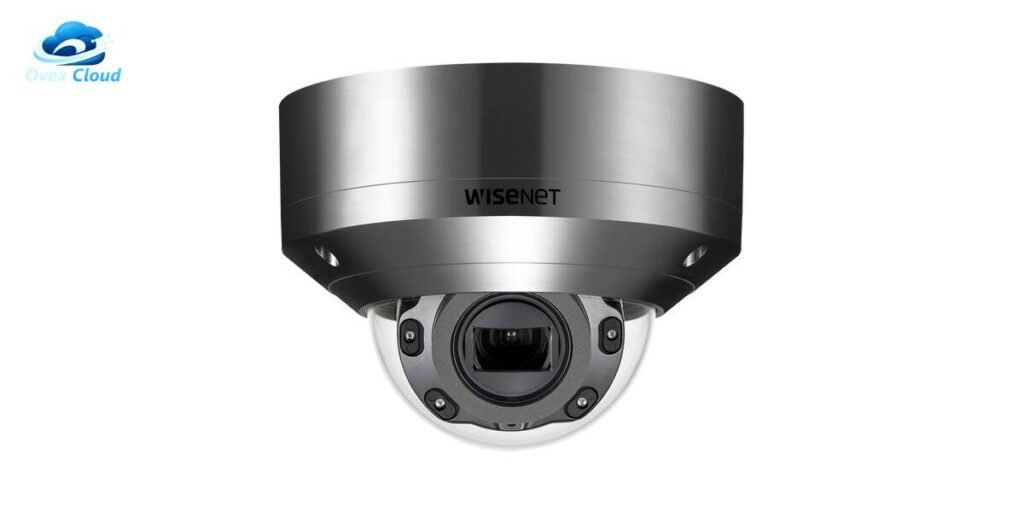
When auditing legacy commercial infrastructure or planning minor facility expansions, security technicians frequently encounter older enterprise models like the Hanwha Vision SND-L6013R listed in active warehouse inventories. This persistent presence is rarely accidental; it speaks volumes about the heavy-duty mechanical engineering and reliable thermal management historically built into commercial-grade surveillance hardware manufactured under the Hanwha umbrella.
Facility administrators, independent system integrators, and corporate loss prevention managers often re-evaluate this specific model when expanding legacy deployments on a controlled capital expenditure budget. Belonging to the foundational Wisenet Lite series, the camera was engineered from the ground up to deliver dependable, cost-effective network video streams for standard indoor commercial environments—such as office buildings, retail back-offices, and multi-tenant complexes—where ultra-high-definition forensic imaging is not an absolute regulatory requirement.
Deploying an older 2-megapixel professional camera today requires a pragmatic balancing act. You have to weigh proven physical durability and stable enterprise network protocols against modern industry leaps in ultra-high resolution sensors and edge-based artificial intelligence analytics. Experienced security buyers look far beyond polished marketing specification sheets. The ultimate operational question always comes down to whether a legacy device can deliver clear, dependable footage capable of resolving real-world security incidents inside a specific commercial floor plan.
Understanding Hanwha Vision SND-L6013R and Its Role in Professional Surveillance Systems
Classified as an indoor infrared network dome camera, this unit occupies the practical middle ground between cheap consumer plug-and-play webcams and complex, multi-sensor surveillance grids found in high-security facilities. Professional security gear separates itself from consumer alternatives through hardened cybersecurity protocols, native enterprise software integration, continuous bitrate management, and commercial-grade physical construction.
Commercial enterprises select dedicated IP cameras because they interface cleanly with centralized recording software and network video recorders without proprietary workaround adapters. The physical dome housing offers distinct architectural advantages over standard bullet cameras in commercial settings. Its low-profile casing naturally resists physical tampering, cleverly conceals the exact direction the lens is pointed, and mounts flush against standard drop ceilings or commercial drywall partitions.
Underneath the hood, network-based IP architecture digitizes the video stream directly at the sensor level. This allows compressed data packets to travel across standard Category cabling straight to centralized management servers or Network Video Recorders. Native integration with NVR and VMS platforms ensures that facility operators can monitor multiple commercial zones through a unified management interface without dealing with clunky capture cards or proprietary display hardware.
Hanwha Vision SND-L6013R Technical Specifications Explained for Real-World Use
Evaluating a professional surveillance device requires translating raw technical numbers into predictable, real-world field performance under varying indoor commercial lighting conditions.
2MP Full HD Resolution: What Image Quality Can You Actually Expect?
The internal sensor outputs a maximum native resolution of 1920 × 1080 pixels at a smooth 30 frames per second, relying on the efficient H.264 compression codec to manage network bandwidth across enterprise switches.
Forensic identification distance depends heavily on pixel density across a moving target. A camera covering a wide corporate double doorway captures a human face with significantly fewer pixels than one focused narrowly on a single-file access control bottleneck. General facility monitoring requires far fewer pixels than forensic identification; observing general employee movement across an open-plan office layout requires a wide field of view, whereas cash-handling registers demand tight pixel allocation per square inch.
Situations where a 2MP sensor remains completely viable include monitoring standard office hallway traffic, tracking inventory movement inside secure commercial stockrooms, and overseeing general checkout queues in retail storefronts. A camera covering a wide reception desk provides great situational awareness, but if you need to identify individuals walking through a restricted corporate entrance, a much higher pixel density per foot becomes necessary.
Lens Design and Field Coverage
The unit comes equipped with a built-in 3.6mm fixed lens that yields a wide horizontal field of view measuring 86.5 degrees.
Fixed-lens configurations eliminate the mechanical complexity and potential motor failure points inherent in motorized zoom assemblies, making them exceptionally stable for static indoor commercial zones. Placement planning requires careful pre-installation calculation because optical zooming is impossible once the camera is physically mounted to the ceiling. Narrow coverage zones deliver high detail over smaller target areas, while wide-angle coverage captures sprawling rooms at the expense of distant object clarity.
Mapping out installation coordinates beforehand ensures that the fixed focal length covers critical entry choke points without leaving massive blind spots near room corners or structural pillars.
Infrared Night Vision Performance in Indoor Environments
Integrated IR LEDs provide active illumination up to 15 meters in pitch-black conditions, automatically triggering the mechanical IR cut filter to switch the feed into high-contrast monochrome video.
Low-light sensitivity relies on a minimum illumination threshold of 0.15 lux at F1.8 in standard color mode, dropping smoothly to 0 lux once the infrared illuminators engage in total darkness. Night monitoring expectations inside commercial buildings must account for complete ambient light loss after operating hours.
Dark corporate hallways, closed office suites, secure storage facilities, and interior entry points benefit immensely from built-in infrared support. Common installation hurdles to watch out for include infrared light reflection bouncing aggressively off nearby side walls, glare from interior glass conference room walls, and severe overexposure if a subject stands directly beneath the lens.
Compression, Streaming, and Storage Requirements
Codec efficiency dictates how long recorded video can be archived on hard drives before storage retention policies overwrite older data blocks. Network bandwidth consumption scales directly with resolution choices, frame rate configurations, and the volume of motion activity occurring within the camera’s field of view.
Recording storage planning requires balancing continuous 24/7 video capture against motion-triggered event recording to maximize retention windows without exhausting hard drive arrays prematurely. Configuring an enterprise network requires calculating total bitrate overhead across all active camera streams to prevent local switch congestion and packet drops.
Real Installation Experience: What to Know Before Installing SND-L6013R
Choosing the Right Installation Location
Physical mounting height dictates the vertical downward angle of the camera, directly influencing whether you capture recognizable human faces or just the tops of people’s heads. Viewing angles must be plotted to avoid aiming directly at bright windows or overhead halogen spotlights that cause severe background backlighting and silhouette effects.
Minimizing blind spots requires mounting the unit strategically where interior walls or structural pillars do not obstruct the primary field of view. Experienced security installers know that the structurally easiest mounting spot is rarely the optimal location for capturing forensic-quality video data.
Network Setup and PoE Installation Considerations
The camera connects to the network via a standard RJ-45 10/100 BASE-T Ethernet port with built-in support for Power over Ethernet (PoE IEEE 802.3af). Power over Ethernet eliminates the need for separate low-voltage power runs, delivering both electrical power and data packets efficiently over a single Ethernet cable.
Switch requirements dictate that connected network switches must supply adequate PoE power budgets to support every attached security peripheral reliably. IP addressing and subnet planning must be executed systematically during commissioning to prevent communication drops across the local enterprise network.
A professional surveillance installation is only as dependable as the underlying enterprise switching fabric supporting it.
Initial Configuration After Installation
Initial setup begins with discovering the camera on the local subnet using manufacturer utility software or IP scanning tools. Network configuration requires assigning a static IP address or reserving an active DHCP lease to prevent administrative lockout down the road.
Video settings must be tuned for contrast, shutter speed, and advanced noise reduction (SSNR) to match specific indoor lighting environments. Time synchronization via NTP ensures that video timestamps match precisely across every camera deployed in the security grid.
Recording schedules, motion detection zones, and user permission hierarchies must be established before handing the system over to daily facility operators.
Hanwha Vision SND-L6013R Performance Review: Where It Performs Well and Where It Falls Short
Indoor Image Quality During Normal Business Hours
Office lighting environments provide stable, balanced illumination that allows the internal image sensor to operate at optimal color saturation and sharp clarity. Retail environments featuring fluorescent or modern LED overhead fixtures benefit significantly from the built-in Lens Distortion Correction (LDC), which straightens out the barrel distortion naturally inherent in wide-angle optical lenses.
Reception areas and corporate lobby spaces appear crisp, balanced, and clear during standard operational business hours. Expected operational strengths include reliable general activity monitoring, low thermal operational output, and consistent streaming stability over standard enterprise network architectures.
Low-Light and Night Performance Evaluation
Indoor nighttime scenarios where office lights are completely powered down trigger the built-in infrared illuminators automatically. IR effectiveness inside enclosed office rooms provides clear monochrome visibility up to the rated distance limit without washing out the foreground entirely.
Image clarity limitations become apparent in large, open-plan office spaces where a single 15-meter IR beam fails to illuminate distant dark corners adequately. Evaluating this legacy model requires acknowledging that an indoor surveillance camera designed years ago should not be benchmarked against contemporary high-end sensors with back-illuminated pixels.
Motion Capture and Evidence Quality
Moving subjects walking at normal speeds across the frame register clearly under well-lit indoor conditions. Walking speed and distance from the optical center dictate whether motion blur degrades facial feature recognition during playback.
Shutter speed configurations must be adjusted manually within the web viewer interface if fast-moving subjects require sharper freeze-frame clarity. Recording video for general activity monitoring and capturing forensic evidence suitable for formal legal proceedings remain distinct operational objectives that require proper initial camera tuning.
Where Hanwha Vision SND-L6013R Makes Sense Today
Deploying this model remains entirely practical for specific, well-defined deployment scenarios where ultra-high-resolution AI analytics are simply unnecessary.
- Existing Hanwha and Wisenet systems requiring direct replacement parts or minor capacity expansions without software license mismatches.
- Office surveillance grids monitoring interior hallways, break rooms, and administrative corridors.
- Retail monitoring covering cash registers, stockroom doors, and customer walkways.
- Indoor enterprise entrances where controlled lighting and predictable traffic patterns exist.
- Small commercial environments operating on tight capital expenditure budgets.
Choosing this hardware makes sense when the primary goal is dependable, uncompromised H.264 video streaming without complex server overhead.
Situations Where You Should Consider a Different Camera
Certain deployment environments exceed the operational boundaries of a legacy 2MP indoor dome camera.
- Outdoor installation projects exposed to rain, dust, or vandalism, which require weatherproof and vandal-resistant ratings that an indoor-only chassis lacks.
- Dedicated license plate capture applications requiring specialized shutter speeds, high-contrast monochrome sensors, and specialized optical zoom ranges.
- Large-area perimeter monitoring where wide fields of view demand 4K or multi-sensor stitching to preserve distant detail.
- AI analytics requirements such as automated object classification, loitering detection, and facial recognition databases.
- Higher-resolution needs where cropping into recorded footage for forensic magnification is a standard operational requirement.
Best Alternatives to Hanwha Vision SND-L6013R
When upgrading legacy setups or designing a fresh commercial deployment, system integrators bypass older 2MP hardware in favor of models delivering superior low-light sensitivity, higher pixel density, or onboard neural processing units. Selecting the correct replacement depends entirely on whether you want to stay within the Hanwha ecosystem or evaluate competitive enterprise-grade alternatives.
Direct Upgrades Within the Hanwha Ecosystem
- Hanwha Vision QND-6082R (2MP Wisenet Q Series Dome): A direct, modern evolutionary replacement for the SND-L6013R. It features a motorized varifocal or fixed lens option, enhanced WDR (Wide Dynamic Range) performance up to 120dB, and updated cybersecurity certifications including UL CAP compliance. Choose this when you want drop-in compatibility with legacy Wisenet NVRs while gaining significantly better performance in high-contrast indoor lighting.
- Hanwha Vision QND-8012R / QND-8082R (5MP Wisenet Q Series): If your security audit reveals that 2MP resolution leaves faces too pixelated at distances past 15 feet, stepping up to these 5-megapixel indoor domes provides a massive jump in forensic clarity without requiring a jump into expensive enterprise license tiers.
- Hanwha Vision XND-6080 / XND-C6083RV (Wisenet X Series with AI): Built for installations requiring advanced edge analytics. These models introduce deep-learning object classification (detecting humans, faces, vehicles, and license plates directly on the chip), extreme low-light performance using larger 1/2-inch sensors, and WiseStream III compression technology to slash storage costs.
Leading Enterprise Alternatives from Competitors
- Axis Communications M3215-LVE / M3210-LVE: For buyers exploring multi-vendor platforms managed via software like Milestone XProtect or Genetec Security Center, Axis M-series indoor domes offer industry-leading build quality, exceptional color fidelity in low light, and rigorous adherence to cybersecurity standards.
- Hikvision DS-2FD7983G0-IZS or Uniview (UNV) IPC3612LE-SF28-HV: Popular budget-to-midrange alternatives frequently deployed by commercial integrators seeking high frame rates and built-in infrared illumination at aggressive price points, though software ecosystem preferences usually dictate choosing these over proprietary Wisenet platforms.
Hanwha Vision SND-L6013R vs Modern AI Security Cameras
Traditional IP surveillance focuses on continuous stream delivery, reliable recording, lower architectural complexity, and a stable professional ecosystem. AI-based surveillance cameras introduce advanced features like automated person detection, vehicle classification, smart search indexing, and sophisticated event filtering.
Not every commercial enterprise requires artificial intelligence at the edge, but high-traffic retail stores and secure corporate facilities benefit immensely from intelligent event filtering.
Maintenance Tips to Keep SND-L6013R Reliable Long-Term
Regular maintenance ensures that legacy hardware continues operating reliably over extended deployment cycles.
- Cleaning the dome cover periodically with microfiber cloths to prevent dust accumulation from diffusing infrared illumination beams.
- Checking image quality and focus settings after building vibrations or minor facility impacts occur.
- Firmware management by applying the latest stable firmware patches to mitigate potential network vulnerabilities.
- Reviewing recording settings to ensure retention schedules match storage drive health metrics.
- Monitoring storage health through routine SMART data audits on attached Network Video Recorders or onboard microSD cards.
- Checking network stability to verify that switch ports and PoE injectors maintain consistent power delivery.
Many physical security failures happen simply because surveillance hardware is installed and subsequently forgotten for years.
Should You Buy Hanwha Vision SND-L6013R Today?
Deploying this model is recommended if your operational requirements involve dependable indoor surveillance, existing compatibility with enterprise Hanwha equipment, and basic video monitoring needs.
You should look elsewhere if your deployment requires modern machine learning analytics, ultra-high-resolution forensic zoom, or long-term infrastructure investments built for future software expansions.
Frequently Asked Questions
What resolution is Hanwha Vision SND-L6013R?
The camera outputs a maximum native resolution of 1920 × 1080 pixels (Full HD 2MP) at 30 frames per second.
Is SND-L6013R suitable for outdoor use?
No. This model is engineered strictly for indoor deployment and lacks the necessary weatherproof or vandal-resistant exterior ratings for outdoor environments.
Does Hanwha SND-L6013R support PoE?
Yes. It supports Power over Ethernet (IEEE 802.3af, Class 2), allowing simultaneous power and data transmission over a single standard Ethernet cable.
How far can the IR night vision reach?
The built-in infrared LEDs provide active illumination up to 15 meters (approx. 49 feet) in total darkness.
Can it connect with existing NVR systems?
Yes. It features standard network protocols and ONVIF compliance, allowing seamless integration with compatible third-party and Hanwha recording platforms.
Is a 2MP security camera still good in 2026?
A 2MP camera remains practical for basic indoor commercial monitoring, hallways, and small office spaces where extreme forensic zoom or complex AI tracking is unnecessary.
What is the best replacement for SND-L6013R?
Modern direct replacements include the Hanwha Wisenet QND-6082R for drop-in 2MP compatibility, or the Hanwha QND-8082R and XND-C6083RV if you need 5MP resolution or onboard AI analytics.